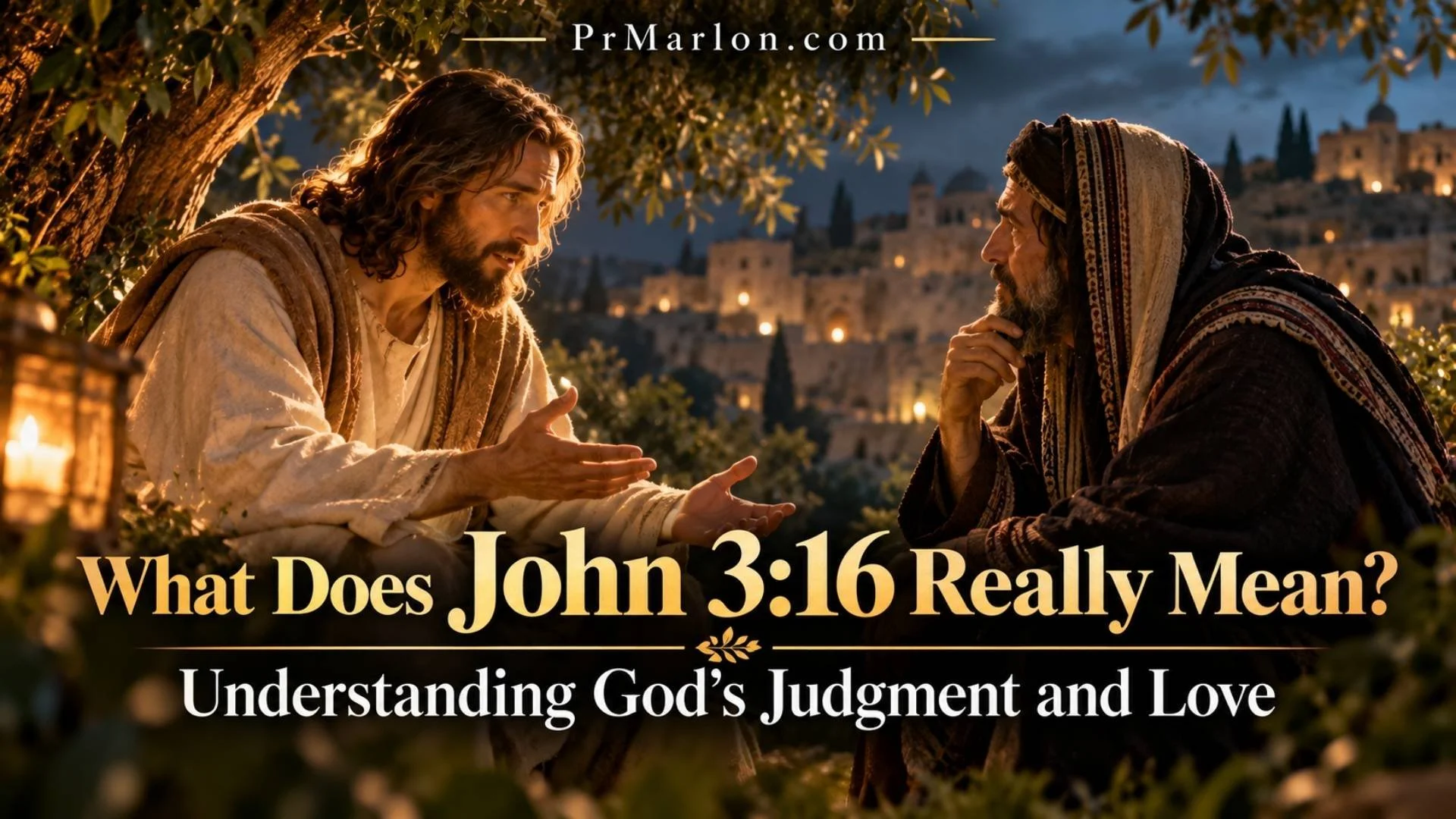
What Does John 3:16 Really Mean? Understanding God's Judgment and Love
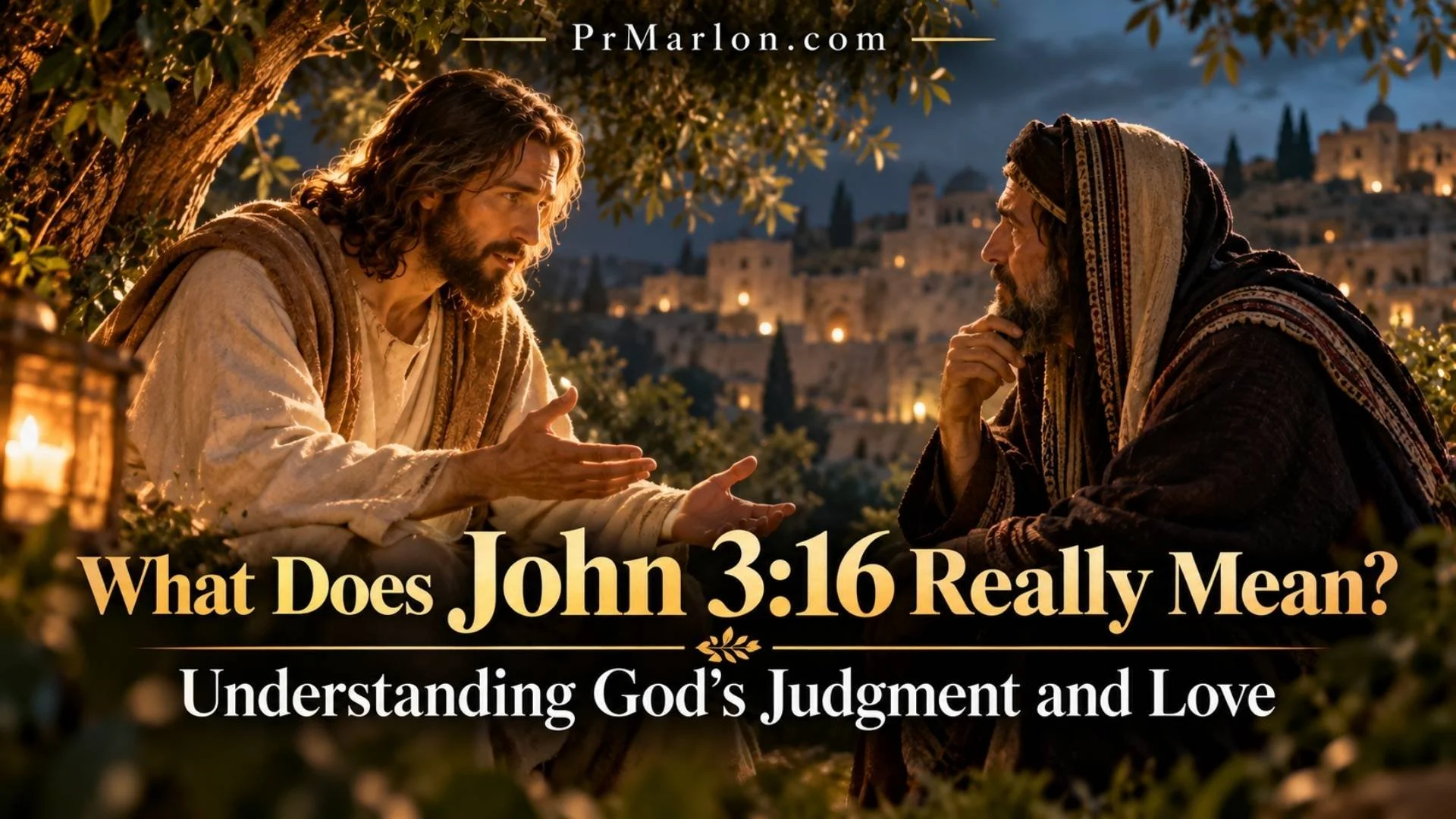
This is my first post on a new series I’m calling “Investigating Judgment.” We are often afraid of what we don’t understand, and that seems to be the case for many when it comes to judgment. So I decided to study this topic and look at a few key Bible stories that can help us understand the biblical notion of Judgment in both the Old and New Testaments. And what better place to begin than John 3:16? It is probably the first verse that comes to mind when you think about the gospel. But did you know that Jesus also talks about judgment in the immediate context of John 3:16? Let’s explore it together.
John 3:16 in Context: Love, Condemnation, and Why Some Prefer the Darkness
John 3:16 is perhaps one of the best-known verses in the entire Bible. But few people are familiar with its context, especially the mention of condemnation in verse 18. In this post, I will explore John 3:14-21 to better understand God’s love and judgment.
14 And as Moses lifted up the serpent in the wilderness, even so must the Son of Man be lifted up, 15 that whoever believes in Him should not perish but have eternal life.
—John 3:14-15 NKJV
Jesus is talking to Nicodemus, a Pharisee, meaning he lived by the strictest possible religious rules. Not all of the Pharisees were hypocrites (as one may infer from Jesus’ comments recorded in Matt. 23), and evidence indicates that Nicodemus was deeply sincere in his quest for truth. He came to Jesus by night; some believe it was because he feared being seen, while others argue it was because he wanted a quiet, uninterrupted conversation with the new Teacher “come from God.” Nicodemus was a man of high moral character and deep religious hunger, yet profound spiritual blindness. (Warren W. Wiersbe, The Bible Exposition Commentary, vol. 1 (Wheaton, IL: Victor Books, 1996), 294–295.)
Jesus mentions Moses lifting up the serpent in the wilderness; this story is recorded in Numbers 21:4-9 and is about a time when the nation of Israel rebelled against God and was punished. God punished the children of Israel by sending fiery serpents among them, and they bit the people, and many died. This is also a story of grace, where God provided a remedy. God told Moses to make a brass serpent and lift it up on a pole for all to see. Anyone who was bitten by a serpent could look up at the bronze serpent and be immediately healed. When the people looked, by faith, they were saved.
The Greek verb lifted up (ὑψόω hoopsoō) means to lift high, exalt, or honor (see Luke 18:14), but John uses it to refer to Jesus’ crucifixion (John 12:23-33; 8:28), when He was literally lifted off the ground.
Much as the serpent was lifted up on that pole, so the Son of God would be lifted up on a cross. Why? To save us from sin and death. In the camp of Israel, the solution to the “serpent problem” was not in killing the serpents, making medicine, pretending they were not there, passing antiserpent laws, or climbing the pole. The answer was in looking by faith at the uplifted serpent.
—Warren W. Wiersbe, The Bible Exposition Commentary, vol. 1 (Wheaton, IL: Victor Books, 1996), 296.
Recently I read about a blizzard that almost crippled the city of Colchester, England, on January 6, 1850. There was a fifteen-year-old boy making his way to church, but because of the severe storm, he could not reach the church he usually attended. So he sought shelter in a nearby small Primitive Methodist chapel. The preacher could not make it to the small church because of the severe weather, and a church member took it upon himself to preach that evening. The key text that evening was Isaiah 45:22:
“Look to Me, and be saved,
All you ends of the earth!
For I am God, and there is no other.”
The teenage boy had been struggling with assurance of salvation, and the simple message of an unpolished preacher moved his heart. The preacher simply repeated, “All you have to do is look to Jesus!” The lay preacher had little else to say, so he looked around the room, saw the visitor sitting by himself, and singled him out. “Young man,” the preacher said, “you look very miserable… Look to Jesus Christ.” The young man did look to Jesus by faith and later wrote, "I did look, and the cloud was gone, the darkness had rolled away, and that moment I saw the sun." (https://www.spurgeon.org/about) That moment transformed the young man's life, and that was how the great preacher Charles Haddon Spurgeon was converted.
The difference between dying and gaining eternal life, between condemnation and salvation, is faith in Jesus.
Jesus makes it clear to Nicodemus that, just as the Israelites of old simply had to believe and be saved from the venomous bites of the fiery serpents, so too did they need faith in Jesus to receive eternal life. We do not know at what point Nicodemus was converted, but we know that He realized that the uplifted Savior was indeed the Son of God (John 19:38-42). Maybe it was when he saw Jesus on the cross, remembered Moses’ bronze serpent and Jesus’ words, and realized that Jesus was indeed the Savior, the Messiah, the Son of God. The next thing that Jesus says to Nicodemus is one of the most well-known verses in the entire Bible.
John 3:16
For God so loved the world that He gave His only begotten Son, that whoever believes in Him should not perish but have everlasting life.
—John 3:16 NKJV
At the risk of repeating what many of you are already familiar with, I just can’t pass up the opportunity to share a few thoughts on John 3:16. It begins with God loving the entire world, not any specific ethnic groups or geographical locations, and that He gave His only, one-of-a-kind Son, and whoever believes in Jesus, the Son of God, will not perish but will instead live forever. God’s love motivated Him to act, to be generous, to give for our benefit.
The full perspective is that God is the initiator and principal actor in salvation, and we should never think that salvation originated with us (cf. 1 John 4:9–10). God, however, has given humanity a sense of freedom and requires us to make a choice. Accordingly, people are responsible for their believing. It is unproductive theological speculation, therefore, to minimize either the role of God or of humanity in the salvation process. The Bible and John 3:16 recognize the roles of both.
—Gerald L. Borchert, John 1–11, vol. 25A, The New American Commentary (Nashville: Broadman & Holman Publishers, 1996), 184.
Though God’s love embraces all mankind, it directly benefits only those who respond to it (see John 1:12). This is because love requires reciprocity in order to be fully effective. But keep in mind that God’s love embraces those who reject it as well as those who accept it. No one can accuse God of not loving them, not even the lost. To claim that God has predestined certain persons to be lost regardless of their own choice in the matter is equivalent to saying He hates them. Such a claim stigmatizes Him as unjust and places upon God the blame for their fate. See Romans 5:8; 2 Corinthians 5:19; John 3:17–20. (Francis D. Nichol, ed., The Seventh-Day Adventist Bible Commentary, vol. 5 (Review and Herald Publishing Association, 1980), 929.)
Not to condemn but to save
For God did not send His Son into the world to condemn the world, but that the world through Him might be saved.
—John 3:17 NKJV
If you’re struggling with John 3:16, the next verse provides clarity. The mission is to save the world. God sent Jesus to save, not condemn, the world. If God did not want to save us, there would be nothing we could do to save ourselves. God could just leave us alone, and on our own we would all die. So whenever you consider salvation and judgment, remember that God wants to save. We don’t have to convince God to save us; it is His intention. God wants to save us more than we want to be saved.
Jesus could well have come to this world as a Judge and destroyed every rebellious sinner; but in love, He came to this world as our Saviour, and He died for us on the cross! He became the “uplifted serpent.” The serpent in Moses’ day brought physical life to dying Jews; but Jesus Christ gives eternal life to anyone who trusts Him. He has salvation for a whole world!
—Warren W. Wiersbe, The Bible Exposition Commentary, vol. 1 (Wheaton, IL: Victor Books, 1996), 297.
Judgment?
“He who believes in Him is not condemned; but he who does not believe is condemned already, because he has not believed in the name of the only begotten Son of God.
—John 3:18 NKJV
John 3:16 serves as a statement of fact involving the agency God used to bring salvation to the world, that is, Jesus (the Son).
John 3:17 expands on God’s intention, clearly identifying God’s Purpose in sending the Son.
John 3:18 provides a pointed statement of reality concerning the present nature of judgment, a reality we cannot fail to understand.
Only when the three verses are read and interpreted together do we begin to grasp the full meaning of Jesus' coming and the Johannine message of salvation expounded here. (Gerald L. Borchert, 183.)
God’s plan is to reverse the human problem—that is, to provide the means by which humanity might be saved (John 3:17). God clearly desires that all might be saved (see Acts 17:30–31; 22:15–16; 1 Timothy 2:4-6; 2 Peter 3:9), but because of human freedom or choice (“whosoever,” in John 3:16), all of humanity does not respond in believing acceptance of the Son (see John 1:11–13; Rom 1:5; 10:16; 1 Tim 4:10). As a result, the rejection of God’s love brings judgment or condemnation (John 3:18). Although many think primarily of the Gospel in terms of the bright side of love, it has a “dark side” that is perhaps more threatening to the unbeliever than almost any other document in the New Testament except the Apocalypse. “To overlook the dark side in John is to miss the full message of the Gospel.” God’s “judging” is a negative theme that is also foundational to this Gospel and is obvious in these verses. (Gerald L. Borchert, 184–185)
What is the condemnation?
19 And this is the condemnation, that the light has come into the world, and men loved darkness rather than light, because their deeds were evil. 20 For everyone practicing evil hates the light and does not come to the light, lest his deeds should be exposed. 21 But he who does the truth comes to the light, that his deeds may be clearly seen, that they have been done in God.”
—John 3:19-21 NKJV
Pay close attention to these verses so you don’t despair. Whenever judgment is brought up, people get uncomfortable. The best way to overcome that discomfort is not to avoid the topic but to try to understand it. We already established that God loved the world to the degree of giving His unique Son. We also know that all we have to do is believe in Jesus, and we receive salvation. Finally, we know that Jesus’ mission is salvation, not condemnation. However, just because God wants to save all of us, it does not mean that all of us want to be saved.
John 3:19-20 makes clear who is being condemned: those who love darkness rather than light because of their evil deeds. They don’t come to the light because they don’t want their deeds to be exposed. The wording of those verses is important. There are people who are exposed to the light of Jesus, but they love darkness, and they love darkness because their deeds are evil. John is not describing someone who merely struggles with temptation. He is describing a preference for darkness rather than coming into the light.
I have met many Christians who worry about their salvation because they fall short of who they wish they were. I have also heard from believers who are terrified of maybe forgetting to confess some old sin or a small one they’re not even sure is a sin or not, and losing their salvation as a result. According to John 3:19-20, those being condemned encountered the light but loved darkness rather than the light.
Making it practical
If the light has exposed something in you, don't run from the Light. Bring it to Jesus. The same Christ who exposes your sin is the Christ who was lifted up to save you.
With this in mind, don’t shy away when God reveals to you something that you need to surrender to Him. Remember that the Light that exposes our darkness is the same Light that came to save us! I want to be 100% clear here: your good behavior will not save you. The goal is not to earn your salvation; the goal is to fall in love with the One who has loved you all along. Maybe you struggle and feel awful because you have heard the gospel; you know that God loves you, but you love sin, and you can’t imagine life without it. You hate the idea of judgment and death, but you also don’t love the idea of spending eternity with Jesus living in paradise, where your favorite sin won’t exist.
Perhaps the idea of surrendering your sin to Jesus terrifies you. But Jesus wants to save you! Orient yourself towards the light that shines from Jesus.
When Jesus shines His light on a specific spot in your life that was previously hidden in darkness, don’t avoid the light. Surrender this area of your life to God. Jesus is not rejecting you; He is revealing aspects of your life that He wants to transform.
Spend time in prayer, talking to God just as you would with a friend. Tell Him what you’re excited about; tell Him what you’re anxious about. Tell Him about your fears of surrendering your favorite sin to Him. Do all of this regardless of how you feel. Act in faith, not based on feelings. And see what God changes in your life as you invite Jesus to shine His light into every dark spot in your heart.
Remember, even the desire to change is a gift from God and a sign that the Holy Spirit is already at work in your life! “For God is working in you, giving you the desire and the power to do what pleases him.” (Philippians 2:13 New Living Translation)
Maybe some struggle with experiencing love for Jesus because the idea of Jesus is so foreign and abstract. I have found that intentionally turning my attention toward Jesus—through prayer, Scripture, worship, and serving others—can make His presence more tangible in my daily life. These practices don't earn God's love. They help me pay attention to the God who already loves me. When I consider my actions in light of Jesus’ words, I make room for Jesus in every area of my daily life. When I choose Jesus throughout my day, I become more aware of what it means to be a follower of Jesus and to have His kingdom come, and His will be done.
Those who practice evil hate the light because it exposes their evil deeds. Jesus exposes evil for what it is, and it is often worse than we thought before He shone His light on it. This brings discomfort, and with the discomfort comes the need for a decision. A person can either surrender their evil deeds to Jesus and receive forgiveness and freedom, or embrace them and reject the light. On the other hand, when you do the truth, you’re happy for the light. I especially like the last part of the verse that points out that the good deeds have been done in God!
Your good deeds are not done in your own strength. God works in you and through you to do the good deeds! I especially like what the Amplified Bible says:
But whoever practices truth [and does what is right—morally, ethically, spiritually] comes to the Light, so that his works may be plainly shown to be what they are—accomplished in God [divinely prompted, done with God’s help, in dependence on Him].”
—John 3:21 Amplified Bible
Judgment is not evidence that God does not want to save us. John shows us that condemnation is connected to our rejection of the Light God has given us. When God shines a light in our lives, it exposes what we truly love. That is why everyone practicing evil hates the light. But the person who does truth gladly comes to the light. That person is happy to have their deeds clearly seen, since their good deeds have been done in God. Remember, salvation is not earned; it is a gift of love that God freely offers all who believe.
The cross tells us three things:
1. God loves us. John 3:16.
2. God wants to save us. John 3:17.
3. The light calls for a response from us. John 3:18–21.
If the light has exposed something in you, don't run from the Light. Bring it to Jesus. Because the Light that exposes your darkness is the same Light that came to save you. Jesus is not revealing your darkness because He wants to reject you. He is bringing it into the light because He wants to transform you.
John says, ‘He who believes in Him is not condemned.’ Jesus wants to save you. You don't have to remain in darkness.
All you have to do is look at Jesus, the One who was lifted up for you. And believe.