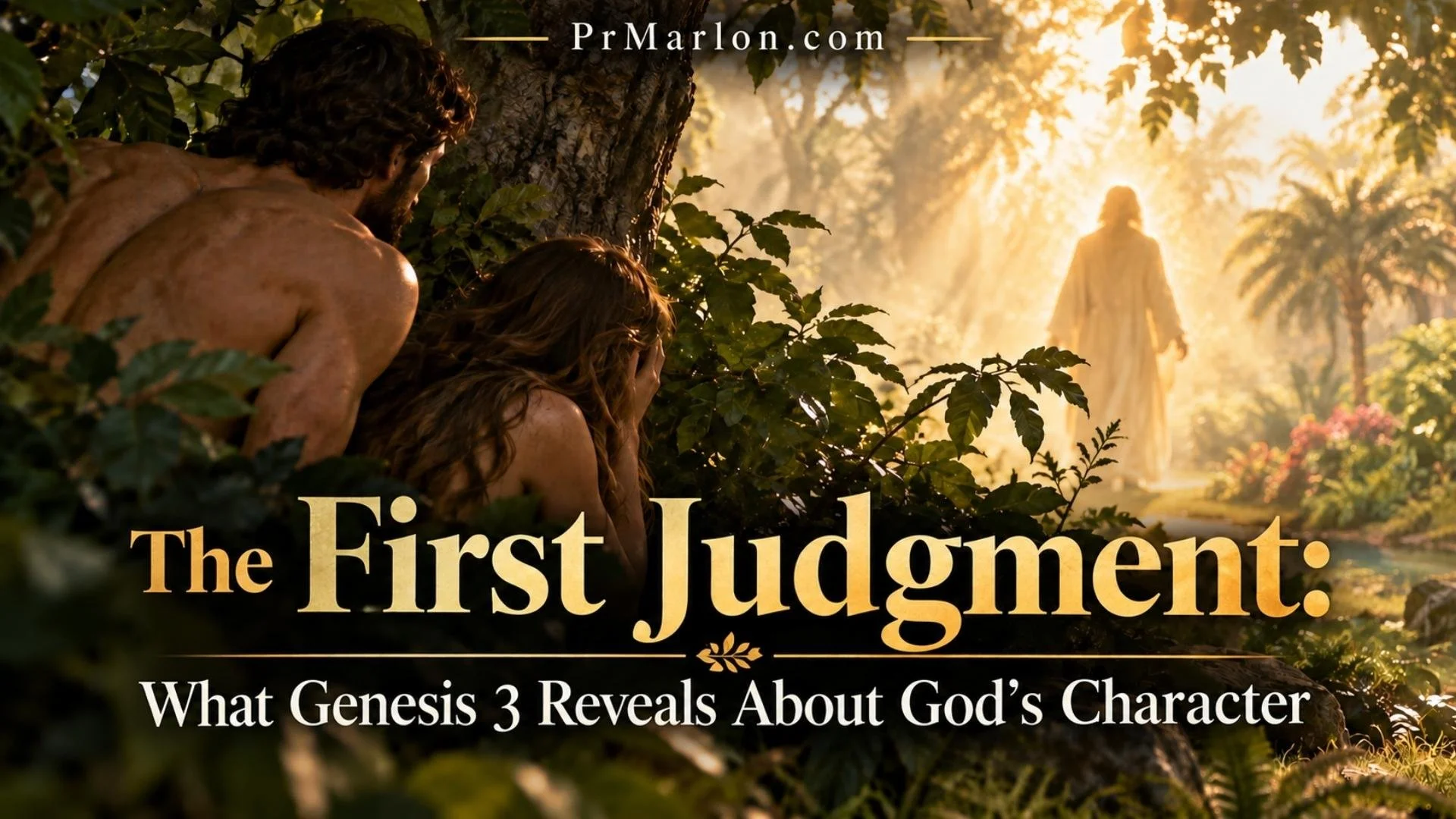
The First Judgment: What Genesis 3 Reveals About God's Character
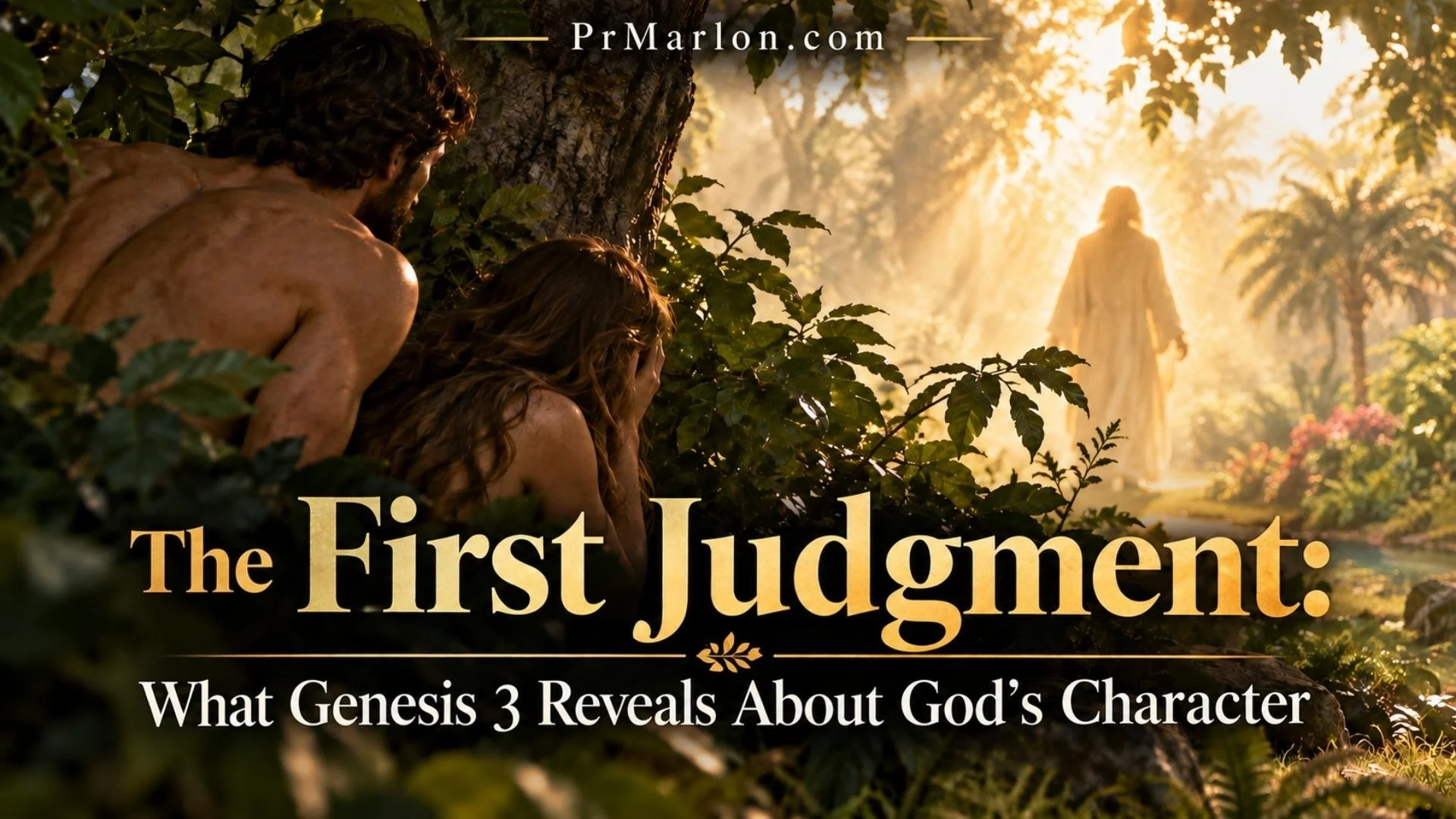
What Genesis 3 Reveals About God's First Judgment
This is my second post in my Investigating Judgment Series. My goal in this series is to study several stories in the Bible where divine judgment takes place, see what we can learn from each, and identify what they have in common. In this post, I will focus on Genesis 3 and the first judgment that appears in the biblical text. Genesis 1-2 describe the creation story. Genesis 3 is set in a perfect world created by God. Adam and Eve lack nothing for their eternal life and happiness. God provided them with everything they could possibly ever need and so much more. Life is perfect!
Genesis 3 begins with the serpent speaking to Eve. The serpent seems to be seeking clarification, asking whether God really said that Adam and Eve should not eat from every tree in the garden. (I touch on this in my post, How Then Shall We Live?) The serpent quotes God almost verbatim; God said Adam and Eve could freely eat from every tree in the garden (Genesis 2:16). Eve corrects the serpent, saying God gave them access to every tree in the garden except one in the midst of the garden. The serpent tells Eve that she would not die, but would become more like God by knowing both good and evil. I have an entire post on this entitled Paradise Lost.
Let’s pick up the story in verse 6.
6 So when the woman saw that the tree was good for food, that it was pleasant to the eyes, and a tree desirable to make one wise, she took of its fruit and ate. She also gave to her husband with her, and he ate. 7 Then the eyes of both of them were opened, and they knew that they were naked; and they sewed fig leaves together and made themselves coverings.
—Genesis 3:6-7 NKJV
God was clear that Adam and Eve should not eat of the tree of the knowledge of good and evil and that if they did, they would die. God’s will and the consequences were clear (Genesis 2:17). Eve was not unsure of God’s will; she repeated it to the serpent and even added that she should not even touch the fruit. Maybe that addition was made with the best of intentions, but it also makes God seem overly harsh when we add to His commandments. This point is very important. Eve did not eat the fruit because she was ignorant or because God had been unclear. Eve did not eat it because it was mixed in her fruit salad and she just didn’t know. The serpent spoke to Eve in such a way that caused Eve to question God’s character. The serpent portrayed God as withholding something good from humanity.
The way I see it, the heart of the issue was God's character. Are God’s rules keeping us from good things? Eve ultimately ate the fruit because she looked at it and judged it to be good for food, pleasing to the eyes, and desirable to make one wise. God said no. But it looked good to Eve. Eve ate because she believed the serpent’s lie about God's character: that God would keep good things from His creatures. Eve wanted to be like God, and she behaved accordingly. If God alone was God, Eve would have listened and obeyed. But the idea of being like God caused her to disregard God’s will, placing her personal desires, ambition, and judgment above God’s clear will.
Eve did not sin because she tried to keep God’s law but couldn’t. Eve did not sin because she was ignorant of God’s will. Eve sinned because she believed the serpent's account of God over God's own word about Himself. Yes, Eve was deceived, but not in the sense that she was handed a fruit and told it was something else. Eve was deceived in thinking she would be better off by disregarding God’s will for her life. Eve then gives the fruit to Adam, and he eats it too. The biblical text does not describe any interaction between Adam and the serpent. The text says only that Eve gave the fruit to her husband, and he ate. If Adam was not deceived by the serpent, why did he eat?
It seems to me that both Adam and Eve doubted God’s character. Eve believed the lie that God was withholding something good from her; she desired to become like God. Even though Adam and Eve had been created in God’s image (Genesis 1:26-27), it was not enough for Eve. Adam, on the other hand, was not deceived (1 Timothy 2:14); therefore, it seems that he preferred to join his wife in disobedience and rebellion against God rather than to turn to God. Was Adam afraid of being separated from Eve? Would he rather die with her than live without her? This may sound romantic, but what does it say about God's character? Adam chose to sin with his wife rather than to trust God to be merciful and gracious and loving. We don’t know what would have happened if only Eve had eaten the fruit. We don’t know how God would have dealt with it. But the fact that Adam joined Eve in her sin indicates to me that he also doubted that God has his best interests at heart.
Adam and Eve ate the fruit because they did not trust that God wanted what was best for them.
The serpent’s half-truth.
The serpent told Eve that her eyes would be opened (Genesis 3:5), and sure enough, both Adam’s and Eve's eyes were opened, and they did become like God, knowing both good and evil (Genesis 3:22). The serpent had enough truth in its lies to make it convincing. The problem is that the knowledge of evil they were missing was terrible and unlike anything they had experienced before. Once their eyes were opened, they discovered that they were naked, and they made coverings for themselves. Adam and Eve tried to solve the sin problem on their own. They experienced shame, so they took fig leaves and sewed them together to make coverings. Problem solved, right!? Now they are like God, and they no longer have to feel shame since they managed to cover their nakedness. Life was fine. Maybe life was even better! Except it wasn’t. Their external fig coverings could never solve a heart problem. They may have succeeded in covering their nakedness, but their guilt, shame, and alienation from God remained. Much like obedience to the law cannot save anyone. Our efforts will never solve our sin problem.
Before Adam and Eve ate the fruit, they were both naked and were not ashamed (Genesis 2:25). Now that their eyes were opened, they knew they were naked, so they made coverings for themselves. It seems like they solved the nakedness problem, and now they were like God, knowing both good and evil. So everything is fine?
Personal relationship
And they heard the sound of the LORD God walking in the garden in the cool of the day, and Adam and his wife hid themselves from the presence of the Lord God among the trees of the garden.
—Genesis 3:8 NKJV
After Adam and Eve sin, they don’t drop dead right then and there. God does not zap them with lightning or cause the ground to open up and for them to fall to their eternal torment in the flames of hell. Instead, they hear the sound of the LORD God walking in the garden in the cool of the day. This description makes it seem like this was a common occurrence. Adam and Eve enjoyed a personal relationship with God, and from this description, it seems like God would just show up, and they would talk and interact. But this time Adam and Eve hid from the presence of the LORD God among the trees of the garden.
Why did they hide? Were they not like God now? Why didn’t they approach God as equals? One could argue that disobeying God’s will makes us like God in the sense that we are not submitting to Him as our Lord. But that hardly makes us gods. Though Adam and Eve were made in God’s image, the difference between them and God is infinite. Recognizing the unfathomable power gap, Adam and Eve hide.
Investigation?
9 Then the Lord God called to Adam and said to him, “Where are you?”
10 So he said, “I heard Your voice in the garden, and I was afraid because I was naked; and I hid myself.”
11 And He said, “Who told you that you were naked? Have you eaten from the tree of which I commanded you that you should not eat?”
12 Then the man said, “The woman whom You gave to be with me, she gave me of the tree, and I ate.”
13 And the Lord God said to the woman, “What is this you have done?”
The woman said, “The serpent deceived me, and I ate.”
—Genesis 3:9-13 NKJV
I have been told that the idea of an investigative judgment makes no logical sense because God already knows everything. That is true if you believe God needs to investigate to acquire knowledge He did not previously have. When I see God asking questions of Adam and Eve, I see it as an investigation, but not to gain information He did not already have. Maybe the name “investigative judgment” is not the best title, but my goal here is to explore what God did as He confronts what happened and asks questions. I prefer to allow the biblical text to describe the process. In this portion, we see elements of a judicial process: God asks a question, Adam and Eve have the opportunity to respond, and then comes the verdict. These are elements of a judicial process. Let’s look at this interaction and see what we can learn.
In Genesis 3:9, God asks Adam, “Where are you?” Do you think God really couldn't find Adam? Throughout the Bible, we read that God is all-knowing (Psalm 147:5; 139; Hebrews 4:12-13; Isaiah 46:10; 1 John 3:20, etc.). If God knew where Adam was, why did He ask? As a father, I have often asked my kids what they are doing, or what they did, when I already know the answer. I ask these questions to help them reflect on their actions and understand the consequences. God asks questions, inviting Adam and Eve to share what happened, to participate in the process, to reflect and engage with God as He brings events into the open.
In verse 10, Adam explains that when he heard God’s voice, he was afraid because he was naked, and he hid. This is interesting to me because Adam and Eve had made coverings for themselves with the fig leaves. When God showed up, Adam and Eve realized their coverings were inappropriate. Though they had covered themselves with fig leaves, they were still afraid. They hid themselves. They felt naked before God and hid. We can have all kinds of coverings and excuses for our favorite sins, but how will these excuses and manmade coverings hold up before almighty God?
I am amazed by God’s patience and tender care with Adam and Eve. In verse 11, God replies with another question. “Who told you that you were naked?” and God adds another question: “Have you eaten from the tree of which I commanded you that you should not eat?” Again, I do not believe God did not know the answer to these questions; He wanted to hear what Adam had to say. Adam had the opportunity to explain himself, tell his side of the story, and reflect on his actions and decision. God gives Adam the opportunity to confess, to come clean, to tell God exactly what happened. After all, God already knows. This is an opportunity for Adam to engage, humble himself, confess, or clarify any misunderstandings. God already knows the truth, but He gives Adam the opportunity to respond and take responsibility for his actions.
Adam takes this opportunity to describe what happened, and he proceeds to throw the love of his life, his wife, literally the only woman on earth, under the proverbial bus. “It was the woman, Lord!” I imagine Adam saying, “You gave her to me, and she gave me the fruit, and I ate. So technically, it’s partly Your fault. I’m the victim here.”
Well, Adam’s response is disappointing. And here I had been thinking about his grand gesture of love by choosing to eat the forbidden fruit with his wife rather than to live without her, but now he blames her for his sin. Adam does not take responsibility for his sin. He does not humble himself and confess his sin; instead, he shifts the blame to Eve and indirectly to God Himself.
God then turns to Eve and asks, “What is this you have done?” Eve, like Adam, shifts the blame by blaming the serpent. Eve had looked at the fruit and seen that it was good for food, pleasing to the eyes, and desirable to make one wise. But now she says the serpent deceived her. Rather than accepting responsibility, Eve shifts the blame to the serpent, and indirectly to God, since God created the serpent. Adam and Eve’s sin separated them from each other and from God.
Judgment and Gospel
14 So the Lord God said to the serpent:
“Because you have done this,
You are cursed more than all cattle,
And more than every beast of the field;
On your belly you shall go,
And you shall eat dust
All the days of your life.
15 And I will put enmity
Between you and the woman,
And between your seed and her Seed;
He shall bruise your head,
And you shall bruise His heel.”
—Genesis 3:14-15 NKJV
After the investigation, once God has given Adam and Eve a chance to share their perspective on what happened, God proceeds to pass judgment. God begins with the serpent. The serpent is cursed more than all the cattle and every beast of the field. This indicates that the serpent did not originally crawl on its belly. The judgment turns prophetic in verse 15, where God explains the battle between the seed of the serpent and of the woman. This prophecy also promises that the Seed of the woman will ultimately crush the head of the serpent. Before Adam and Eve were judged, they heard the first gospel: the promise that ultimate victory over the serpent would come from one born of a woman. We understand this to be a prophecy about Jesus. Though the woman was deceived by the serpent and the first to sin, God would also bring the ultimate victory from a woman. Jesus, the Messiah, was born of a woman, and though His heel was bruised by the serpent (Hebrews 2:14; see footnote for more), Jesus defeated Satan (Romans 16:20) when He died on the cross and rose from the grave. (For more on the identity of the serpent as Satan, see Revelation 12:9.) Humanity’s story will not end with the serpent’s apparent victory.
The coverings Adam and Eve made, their excuses and shifting of blame, were insufficient; they stood guilty and ashamed before a holy and powerful God. But God is not only omniscient and omnipotent. God is also loving and merciful and desires to save. Amid judgment and condemnation, we have a promise of victory. It is not hopeless. Though Adam and Eve are guilty of disobedience and rebellion, God does not leave them hopeless. God is not looking for an opportunity to destroy humanity; God is interested in redeeming humankind.
Once God has pronounced His judgment upon the serpent, He then turns to the woman.
To the woman He said:
“I will greatly multiply your sorrow and your conception;
In pain you shall bring forth children;
Your desire shall be for your husband,
And he shall rule over you.”
—Genesis 3:16 NKJV
Notice that in this pronouncement there is no mention of a “curse” as we see regarding the serpent (v.14). Eve will face challenges; giving birth will now be painful, but there is hope that Eve will be able to bring forth children, and eventually the promised one will be born of a woman. There is considerable debate over the meaning of the latter half of God's pronouncement. Regardless of how we interpret the specific meaning of Eve's desire, we should recognize that the introduction of domination into the relationship between man and woman belongs to the consequences of sin. In Genesis 1, God created both man and woman in His image and gave them dominion over the earth. Now, their relationship will experience conflict and an imbalance of power.
Now it is Adam’s turn.
17 Then to Adam He said, “Because you have heeded the voice of your wife, and have eaten from the tree of which I commanded you, saying, ‘You shall not eat of it’:
“Cursed is the ground for your sake;
In toil you shall eat of it
All the days of your life.
18 Both thorns and thistles it shall bring forth for you,
And you shall eat the herb of the field.
19 In the sweat of your face you shall eat bread
Till you return to the ground,
For out of it you were taken;
For dust you are,
And to dust you shall return.”
—Genesis 3:17-19 NKJV
Because Adam listened to his wife's voice and disobeyed God’s command, the ground was cursed. The biblical text highlights how Adam listened to his wife instead of God. Listening to our spouse isn't the problem; the problem is letting anyone influence us to disobey God. When God says “No,” we need to be careful not to listen to anyone who says it’s not that big of a deal. It was just a fruit, right? How bad could it be? Eve listened to the serpent, Adam listened to Eve, and no one listened to God’s command not to eat from that tree.
As a result of Adam and Eve’s sin, life would no longer be the same. Not only will death now exist, but there will also be more pain and struggle, more sorrow and suffering as a result of sin. But after God decrees the judgment, He does not abandon Adam and Eve.
Also for Adam and his wife the Lord God made tunics of skin, and clothed them.
—Genesis 3:21 NKJV
God made tunics of skin to clothe Adam and Eve. This may seem like a small detail, but it is deeply meaningful.
The language of the verse alludes to tabernacle setting and worship. “Garments” (kūttōnet) and “clothed” (lābaš) are reminiscent of the Pentateuch’s description of priestly garments, particularly for Aaron as high priest.
—K. A. Mathews, Genesis 1-11:26, vol. 1A, The New American Commentary (Nashville: Broadman & Holman Publishers, 1996), 254–255.
Genesis does not explicitly identify the death of these animals as a sacrifice for sin. Nevertheless, the imagery is significant. Adam and Eve's attempts to cover themselves were insufficient, but God provided clothing for them. An innocent animal died, and its skin covered their nakedness. In light of the sacrificial system that would later be established, this account provides a meaningful picture of the substitutionary principle that would ultimately be fulfilled in Christ. (see footnotes on garments of skin)
Banished from Eden
22 Then the Lord God said, “Behold, the man has become like one of Us, to know good and evil. And now, lest he put out his hand and take also of the tree of life, and eat, and live forever”— 23 therefore the Lord God sent him out of the garden of Eden to till the ground from which he was taken. 24 So He drove out the man; and He placed cherubim at the east of the garden of Eden, and a flaming sword which turned every way, to guard the way to the tree of life.
—Genesis 3:22-24 NKJV
Finally, Adam and Eve are banished from the garden, and cherubim are placed at the east of the garden of Eden to guard the way to the tree of life. Adam and Eve were not killed in that instant, but because of sin they would eventually die. That day they lost access to the tree of life, and as a result they were now subject to the death God had warned about. Life, after all, is a divine gift (Romans 6:23).
Cherubim and God’s Presence
Cherubim are beings associated with God's presence (Psalm 18:10; Ezekiel 10). The covering of the sacred ark had golden cherubim (Exod 25:18–22; 37:7–9), and cherubim decorated the curtains of the holy of holies (Exod 26:1, 31; 36:8, 35). Carved cherubim also decorated Solomon’s temple, especially in the most holy place (1 Kgs 6:23–29, 36). Here, however, they guarded the way to the tree of life, keeping Adam and Eve from gaining access to it and living forever in their fallen state. (Genesis 3:22-24)
Takeaway
In the story of the first judgment recorded in the Bible, we see God not eager to destroy or punish, but willing to engage in conversation and investigate, not because He lacks information, but to give the events an opportunity to be examined and understood. God invites Adam and Eve to participate in the process by asking questions, allowing them to explain themselves, and bringing their actions into the open. God promises victory that will come from the Seed of the woman (for more, see SomeOne is Coming), and He makes garments of skin to cover Adam and Eve’s nakedness and shame. The language shares imagery with the tabernacle and sacrificial system, suggesting an early picture of substitutionary atonement. What is implicit here becomes much more explicit as the biblical story unfolds.
Genesis 3 is a story of the fall and judgment, but at its heart it is a story about God and His desire to save and redeem humanity. The problem of sin is not merely that humanity broke a rule and incurred a penalty. Humanity lost access to the life and relationship God intended for it. The rest of Scripture can be understood, in part, as the story of God's work to restore that relationship. Ultimately, we see the restoration taking place in Revelation 21–22, where God's dwelling is again with humanity, the curse is removed, and access to the tree of life is restored.
The investigation before the judgment is not about God looking for evidence to condemn Adam and Eve. It invites Adam and Eve to reflect on their actions and recognize not only that they deserve death, but also that they need salvation. Through the investigation, God makes clear to all what happened and what needs to happen next.
But who is “all”?
You may wonder who needs clarity if this story involves only Adam, Eve, God, and the serpent. The immediate narrative does not identify a heavenly audience observing this interaction. However, as we continue studying judgment throughout Scripture, we will encounter passages that explicitly describe heavenly assemblies and judicial proceedings (Job 1:6; 1 Kings 22:19; Revelation 4-5). These passages may help us understand the broader significance of what we see beginning in Genesis 3.
For now, God’s “investigation” of what took place helps us understand Him, His heart, and what He desires. Though He would have been just if He had killed Adam and Eve right then and there, He chose to have mercy on them and provide a way for them not only to live for now but also to gain eternal life once again.
What difference does that make in my life? This story encourages me to approach God, confess my sins in humility, and recognize my need for salvation. This story reminds me that God wants to redeem me, not condemn me. God values an honest relationship and dialogue. I should not hide from God in fear or shame, or shift blame to others, but come to Him to be covered by His righteousness, just as He provided garments to cover Adam and Eve.
Footnotes:
Clothing of light?
Some argue that Adam and Eve had previously been covered by a garment of light that disappeared once they sinned. Support for this interpretation is found in Psalm 104:2, where it describes God covering himself with light as with a garment.
Bruising of the heel
I appreciate Matthew Henry’s poetical description of the bruising of the heel.
It was the devil that put it into the heart of Judas to betray Christ, of Peter to deny him, of the chief priests to prosecute him, of the false witnesses to accuse him, and of Pilate to condemn him, aiming in all this, by destroying the Saviour, to ruin the salvation; but, on the contrary, it was by death that Christ destroyed him that had the power of death, Heb. 2:14. Christ’s heel was bruised when his feet were pierced and nailed to the cross, and Christ’s sufferings are continued in the sufferings of the saints for his name. The devil tempts them, casts them into prison, persecutes and slays them, and so bruises the heel of Christ, who is afflicted in their afflictions. But, while the heel is bruised on earth, it is well that the head is safe in heaven.
—Matthew Henry, Matthew Henry’s Commentary on the Whole Bible: Complete and Unabridged in One Volume (Peabody: Hendrickson, 1994), 14.
Garments of skin
Leviticus 7:7-8 describes the relationship between the trespass offering and the sin offering, while verses 8-10 explain that the priest receives the skin of the burnt offering. Although Genesis does not explicitly identify the animals killed to provide Adam and Eve's clothing as a sin offering, the later sacrificial system provides an illuminating context for understanding the imagery of an innocent life given and its skin used to cover humanity's nakedness.
Speaking of allusions to the tabernacle and sacrificial system, I like how the New American Commentary highlights some of these points.
Since the garden narrative shares in tabernacle imagery, it is not surprising that allusion to animal sacrifice is found in the garden too. Through an oblique reference to animal sacrifice, the garden narrative paints a theological portrait familiar to the recipients of the Sinai revelation who honored the tabernacle as the meeting place with God. Sacrifice renewed and guaranteed that special union of God with his people (e.g., Day of Atonement, Lev 16). This mode of provision then for Adam and Eve affirmed God’s abiding goodwill.
Moreover, that God “made” (ʿāśâ) these garments stands in striking relief to the seventh day, when God ceased from all that he had “made” (ʿāśâ) (2:2–3). “Made” routinely describes God’s creative work, occurring eleven times in 1:1–2:4. God has “made” the woman (2:18) and the animals of the fields (3:1) as acts of creation, but now his action in behalf of the couple is salvific in character. The God of the garden as Creator and Savior mirrors the God of tabernacle sacrifice, whom Israel had come to recognize by the voice of Moses and the prophets.
—K. A. Mathews, Genesis 1-11:26, vol. 1A, The New American Commentary (Nashville: Broadman & Holman Publishers, 1996), 255.