Who Were the Nephilim in Genesis 6? Biblical Meaning Explained
Exploring the biblical identity of the Nephilim
This post is still a work in progress, but here is what I have so far.
If you’re in a hurry here is a quick answer from the LOGOS AI study assistant.
The Nephilim occupy a contested place in biblical interpretation, with scholars divided over whether they were supernatural beings or merely exceptional humans. Most contemporary Bible scholars treat the Nephilim as entirely human—specifically, the offspring produced when the sons of God (understood as males from Seth’s line) intermarried with women from Cain’s descendants[1]. The Hebrew root underlying their name suggests “fallen ones,” indicating moral corruption rather than supernatural origin[1].
However, textual complications challenge this consensus. The syntax of Genesis 6:4 doesn’t clearly establish that the Nephilim resulted from the union of divine and human partners[2], and their reappearance after the flood—when the spies encounter giants descended from the Anakim in Canaan—raises the puzzle of how they survived an event presumably designed to eliminate them[2]. Biblical descriptions emphasize their superhuman proportions and strength, with figures like Goliath standing approximately nine feet nine inches tall and wielding massive weaponry[1].
Some scholars locate the Nephilim within ancient Near Eastern mythological traditions, viewing them as adaptations of Babylonian antediluvian kings or parallels to semi-divine beings in Mesopotamian, Egyptian, and Greek texts[3]. New Testament writers adopted intertestamental interpretations linking Genesis 6 to fallen angels, though passages like Jude and 2 Peter emphasize the angels’ actions rather than their offspring[3]. Jesus reinterpreted the passage in Matthew 24 and Luke 17 by focusing on indiscriminate marriages rather than superhuman offspring, a non-mythological approach that influenced later church fathers and reformers toward viewing the Nephilim as strictly human[3].
[1] Hugh Ross, The Genesis Question: Scientific Advances and the Accuracy of Genesis (Colorado Springs, CO: NavPress, 2001), 128–129.
[2] Douglas Mangum, Miles Custis, and Wendy Widder, Genesis 1–11, Logos Research Commentaries (Bellingham, WA: Logos Bible Software, 2026). [See here, here.]
[3] Brian Neil Peterson, “Nephilim,” in The Lexham Bible Dictionary, ed. John D. Barry et al. (Bellingham, WA: Lexham Press, 2016). [See here, here, here, here.]
Nephilim
The identity of the “Nephilim” (Genesis 6:4) and their relationship, if any, to the marriages (Genesis 6:2) is perplexing. The word “Nephilim” occurs but once more, in Numbers 13:33, where it refers to an indigenous population inhabiting Canaan. For Genesis 6:1–4, the primary question is whether the Nephilim are the offspring of the marriages or merely their contemporaries. The term “Nephilim” (nĕpilîm) offers little help in resolving the issue, since its etymology is uncertain. “Nephilim” is a transliteration of the Hebrew, not a translation, which indicates a group or class. It is commonly related to nāpal, meaning “to fall”; thus the Nephilim are considered “the Fallen Ones.” If so, does this refer to their expulsion from heaven, their death as “fallen” in battle, or to their moral degeneracy?
Another proposal is the related noun nēpel, meaning “miscarriage” (Job 3:16; Ps 58:8 [9]; Ecclesiastes 6:3), suggesting that they were unusual in appearance since they were born by miscarriage. The terms “fallen” and “warriors” occur repeatedly in Ezekiel’s oracles against the nations (Ezekiel 32:20–27) whose armies fall in battle; this may have alluded to Genesis 6:1–4. Ezekiel’s use of “fallen,” however, is likely a sound play on the word “Nephilim” rather than deriving from an etymological association.
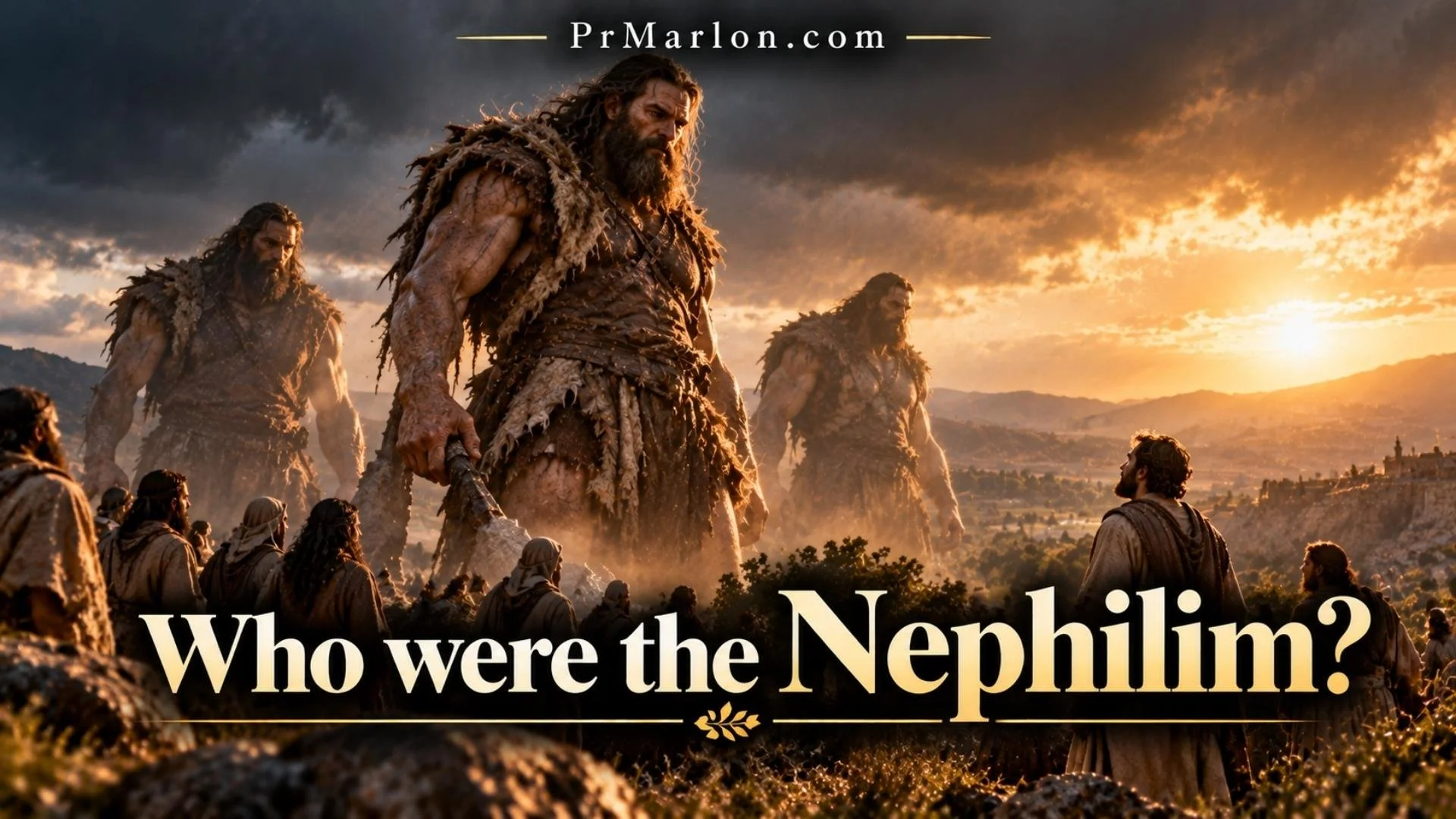
The traditional English rendering “giants” follows the LXX (Septuagint, the earliest extant Greek translation of the Hebrew Scriptures or Old Testament), which translates gígantes for Hebrew nĕpilîm. We can most likely attribute this to the influence of the later account in Numbers 13:33. The frightened Israelite spies marveled at the Nephilim's exceptional height, remarking that the Hebrews were no more than “grasshoppers” before them. Later Jewish literature interpreted the Nephilim as giants and referred to their infamous pride and wickedness.
However, Numbers 13:33 cannot be used confidently to interpret the meaning of “Nephilim” in 6:4 because of the passage’s own problems. Numbers 13 tells us that the Anakites are said to be descendants of the “Nephilim.” If the Nephilim of Numbers 13:33 and Genesis 6:4 are taken as the same group, the verse indicates that the Nephilim and their descendants survived the flood. The biblical text is clear regarding the flood and that salvation was only available for those who entered the ark. (see my post Noah's Flood: Understanding God's Judgment and Grace)
Related to this is the question of the authenticity of the phrase “the descendants of Anak come from the Nephilim” (Numbers13:33). It is absent from the LXX tradition and may be a superficial gloss motivated by a late interpretation of Genesis 6:4 as “giants.” This is further suggested by the divergent language in v. Numbers 13:33, “sons of Anak,” whereas Numbers 13:22, 28 earlier have “descendants of Anak.” Moreover, the Anakites in Deuteronomy are cataloged with peoples, such as the Rephaites, who resided in Canaan and were known for their size and military prowess (Deuteronomy 1:28; 2:10–23; 9:2). Yet it is significant that the Nephilim are never listed in Deuteronomy, where the inhabitants of Canaan are given.
Defining the term on the basis of Numbers 13 may be misleading since the spies were certainly exaggerating (“grasshoppers”) the opposition they encountered in Canaan. Actually, the faithless spies counted all the inhabitants as formidable: “All the people we saw there are of great size” (Num 13:32). There is no intention in Numbers to equate the Nephilim of Moses’ day directly with the antediluvian Nephilim. When we consider the evidence of Deuteronomy’s recollection of these Canaanite peoples, it is better to understand the allusion to the Nephilim therefore in Numbers 13 as figurative, cited by the spies because of the violent reputation attributed to “Nephilim” from ancient times.
Beyond the meaning of the name “Nephilim,” the primary exegetical challenge is understanding the logical relationship between v. 4 and the preceding verses, since there is no grammatical connection. Is there a relationship between the marriages of vv. 1–2 and the “Nephilim” (v. 4)? Are the “Nephilim” the offspring of these marriages or only contemporaries? Are the “Nephilim” and “heroes” (i.e., “Gibborim”) the same? The problem rests with the progression of vv. 1–4. The expected transition from the sexual unions recounted in vv. 1–2 to the acknowledgment of children born to those unions in v. 4 is interrupted by the oracle of judgment in v. 3. Verse 3, however, is logically the end of vv. 1–2, which leads to God’s interdiction against the marriages. There is no compelling reason to alter the present arrangement of vv. 3 and 4.
It still remains for us to explain the proper place of the “Nephilim” in the sequence of the passage. Some have recommended that the reference to the Nephilim in v. 4a is either a secondary gloss or a parenthetical aside.131 Yet recognition of the “Nephilim” who live at this time is integral to the purposes of vv. 1–4, describing what the times were like at the end of the antediluvian age. The presence of the Nephilim, then, was another evidence presented by the author to depict the wickedness that marked antediluvian society.
Sometimes overlooked is the fact that the Nephilim are not specifically said to be the offspring of the marital unions. Rather, for the author, establishing the time of the Nephilim’s era is prominent: they lived in “those days,” a reference to this antediluvian period of human proliferation described in vv. 1–2, and they existed “when” the intermarriages took place and “also afterward.” This establishes the period of the Nephilim as being before and after the marriages (v. 2). The verb “went to” (yābōʾû), describing the actions of the “sons of God,” often is used of sexual relations. Here it has been taken as customary in sense; thus “whenever” the sons of God and daughters of men marry, the result is children born.134 This fits obviously with the theme of proliferation in vv. 1–4. It may be rendered as ingressive “when [they] began going …”; this latter sense focuses on the commencement and continuation of their sexual liaisons. If so, this indicates that the Nephilim are already alive at the beginning of the momentous event of the times, the intermarriage of the “sons of God” and the “daughters of men.”
“And also afterward,” as rightly shown by the NIV arrangement (also NRSV, NJB, NAB), is a parenthetical note that reflects Num 13:33. We have remarked earlier that “Nephilim” is best taken in Numbers 13 as a scare tactic by the cowardly spies who drew on these shadowy figures of the past to win their case. “The Nephilim” (hannĕpirîm) with the definite article in 6:4 indicates that a specific or well-known group or class is meant. When the spies appealed to the designation “Nephilim” as imposing adversaries, they drew on the reputation of the Nephilim, probably because of their association with an era infamous for its violence (6:5–8).
This is further insinuated in 6:4 by the presence of the “heroes [gibbōrîm] of old” (i.e., Gibborim) who are the “children” born to the sons of God and daughters of men. These are the warrior class, men of ignoble reputation whose violent exploits are remembered (cf. 6:11–13) and whose names strike fear in the hearts of their hearers. They are identified as “men of renown” (ʾanšê haššēm), not divine or semidivine figures. Despite their notorious achievements they are no more than “men,” subject to the same judgment as any (v. 3). As warriors of “renown” (šēm) they seek reputation by their wicked deeds in the way the people of Babel will seek fame through their building enterprise (cf. 11:4). The allusion in 6:2 to Eve’s vain desires (3:6) and the inclusion of “name” here contribute to the motif of prideful autonomy, which characterizes the sins of prepatriarchal times (chaps. 1–11). Not all is lost however. There is in the midst of the wicked generation a favored man, Noah (6:8). God graciously preserves Noah’s lineage (8:1) and gives him a “name” (šēm), which is his son, “Shem” (šēm; 11:10–26); by Shem’s family the Lord gives Abraham, upon whom he confers a “name” (12:2; cf. also 2 Sam 7:9).
(K. A. Mathews, Genesis 1-11:26, vol. 1A, The New American Commentary (Nashville: Broadman & Holman Publishers, 1996), 335–339.)
Here is what the The Lexham Bible Dictionary has to say about the Nephilim
Nephilim (נְפִלִים, nephilim). Either giants or semi-divine beings who appear during the pre-flood era (Gen 6:4a) and prior to the conquest period (Num 13:33).
Introduction
The identification of the Nephilim is debated. The term “Nephilim,” likely derived from the Hebrew verb נָפַל (naphal, “to fall”), appears to be an eponym for a class of renowned warrior-like people who fell in battle. Later Greek interpreters identified the Nephilim as semi-divine “giants” (γιγαντες, gigantes) that arose from the union of the “sons of God” and the “daughters of men” (Gen 6:1–4). The identification of Nephilim in Genesis is difficult to discern. However, the Nephilim in Numbers are directly linked to the giant race of the Anakim, and by extension the Rephaim, Emim, and Zamzummim (Deut 2:10–11, 20). This connection likely paved the way for the Septuagint (LXX) translators’ interpretation of Nephilim as giants. The Greek LXX, intertestamental, and New Testament writers, rabbinic exegetes, and historians have all influenced understanding of the Nephilim.
Etymology
The designation “Nephilim” is a transliteration of the Hebrew word into English; it is not a translation. The Hebrew Masoretic Text (MT) usage seems to refer to a class of people/beings rather than an individual. The many nuances of the verb נָפַל (naphal) in the MT suggest that the Nephilim were individuals known for their military and leadership prowess who had fallen in ancient battles.
Aspects to consider when determining the etymology of the word “Nephilim” include:
1. the etymology of the Hebrew nominal form in Gen 6:4a and Num 13:33;
2. similar inflected forms elsewhere in the MT;
3. the LXX usage;
4. possible synonyms used for “Nephilim”;
5. Hebrew etymology of the nominal form.
Hebrew Nominal Form
The Hebrew root of “Nephilim” in Gen 6:4a and Num 13:33 could be:
1. נָפַל (naphal), meaning “to fall”; “Nephilim” could be a “passive adjectival formation” of the Hebrew verb נָפַל (naphal) meaning the “fallen ones” (compare Hendel, “Of Demigods and the Deluge,” 22; Owens, Analytical Key to the Old Testament, 23; Kraeling, “The Significance and Origin of Genesis 6:1–4,” 203). The term “Nephilim” places emphasis not on the state of “what these individuals had been in their lives, but on the state in which they now were” (i.e., warriors fallen at the hand of Yahweh; Kraeling, “The Significance and Origin of Genesis 6:1–4,” 203; compare Ezek 32). “Fallen ones” can refer to:
• the angels who fell from heaven;
• humanity’s moral fall in Eden and prior to the flood;
• hostile warriors who “fall upon” the unsuspecting;
• those who have “fallen” in battle (compare also Ezek 32:20–27 see Koehler and Baumgartner, The Hebrew and Aramaic Lexicon, 709);
• the response of those who beheld these fearsome beings—that is, people who fell before them in fear while exhibiting a fallen countenance (Calvin, Commentaries on the First Book of Moses, 244).
2. נֵפֶל (nephel), meaning “miscarriage”; “Nephilim” may have its origins in the word נֵפֶל (nephel, “miscarriage”), suggesting that these beings were odd-looking individuals who had survived pre-term delivery (compare Job 3:16; Psa 58:8[Eng]; Eccl 6:3; see Koehler and Baumgartner, The Hebrew and Aramaic Lexicon of the Old Testament, 709; Mathews, Genesis 1–11:26, 336). Coxon suggests that the term may refer to the ghosts or spirits of the miscarriages, something that would have been “ill-omened” in the ancient world (Coxon, “Nephilim,” 619). Genesis Rabbah 26.1B.K, records that “they [i.e. the Nephilim] threw the world down, and they fell from the world, and they filled the world up with abortions on account of their licentiousness” (italics Neusner’s, compare Neusner, The Components of the Rabbinic Documents, 30)—all three italicized words derived from the Hebrew root נפל (npl).
3. פָּלָא (pala'), meaning “extraordinary”; “Nephilim” may be from the Hebrew passive form of the verb פָּלָא (pala') meaning “extraordinary” (as in “extraordinary men”; compare van Broekhoven, “Nephilim,” 519). This option has little textual support.
Similar Inflected Forms Elsewhere in the MT
The verb נָפַל (naphal), which the word “Nephilim” may be derived from, sometimes indicates someone who has fallen in battle. In some cases, נָפַל (naphal) also appears alongside the concept of someone who is a “valiant/mighty warrior” (גִּבֹּרִים, gibborim; compare Hendel, “Of Demigods and the Deluge,” 22). For example:
• In 2 Sam 1, David laments over Saul and Jonathan by noting how the mighty/warriors “have fallen” (נָפְלוּ, nophlu;2 Sam 1:19, 25, 27).
• In Ezek 32, the prophet uses variations of the verb נָפַל (naphal) at least six times in a military context (compare Ezek 32:12, 20, 22, 23, 24, 27). For example, in Ezek 32:27, Ezekiel describes how the proud nations will not go down to the pit to dwell among the glorious heroes “fallen” (נֹפְלִים, nophelim), but will suffer an ignominious death and burial (see also Isa 14:11). Wenham and Zimmerli argue that these passages reflect the Gen 6:4a tradition of the Nephilim (Wenham, Genesis 1–15, 143; Zimmerli, Ezekiel 2, 176).
• Jeremiah warns the false priests and prophets that they would fall (יִפְּלוּ, yippelu) “among the ones who have fallen” (בַּנֹּפְלִים, bannophelim) in the defense of Jerusalem (Jer 6:15; 8:12).
Greek Etymology
The LXX translators render the Hebrew term “Nephilim” as γιγαντες (gigantes), meaning “giants.” However, older versions of the LXX render “Nephilim” merely as “assailants” or “violent men” (compare Green, The Unity of the Book of Genesis, 57). The LXX writers likely made an interpretive call, probably influenced by Num 13:33 (compare Mathews, Genesis 1–11:26, 336). They probably based their view on similar interpretations in intertestamental apocalyptic thought and Greek mythology (e.g., the Greek titans/demigods [e.g., Heracles, Theseus, Perseus, Achilles, etc.]; the works of Apollodorus; see Kraeling, “The Significance and Origin of Genesis 6:1–4,” 204–05).
Synonyms for the Nephilim in the Bible
A number of people groups appear in the MT whose names serve as either synonyms for the Nephilim, or who are suggested to be ancestrally related to them (the latter three used interchangeably in Deut 2:10–11, 20):
1. Anakim;
2. Rephaim;
3. Emim;
4. Zamzummim.
In Numbers 13:33, the MT connects the Nephilim to the giants identified as the Anakim. The rabbinic tradition of Genesis Rabbah 26:1B adds Gibborim and Avim to this list (see Neusner, The Components of the Rabbinic Documents, 29). These groups are said to have lived in the land of Palestine before and during the conquest (see also Gen 14:5). For example, Og—a giant whose bedstead was nine cubits long and four cubits wide—is said to have originated from the “remnant” of the Rephaim in Deut 3:11 (probably referring back to Gen 14:5 and 15:20); his land has the same toponym (compare Deut 3:13). King Og, the Anakim, and Rephaim all died at the hands of Joshua (compare Josh 9:2; 11:21–22; 14:12, 15; 17:15) and David (1 Sam 17; 2 Sam 21). Hendel concludes that the Nephilim/Anakim appear in the text as enemies of God and Israel with the primary function to die at the hands of God’s chosen leaders (Hendel, “Of Demigods and the Deluge,” 21).
Biblical Usage
The term “Nephilim” appears in Gen 6:4 and Num 13:33. The discussion of Gen 6:4 is dominated by:
1. interpretive issues;
2. grammatical issues;
3. mytho-historical issues.
The Numbers and Genesis passages are often blended in interpretation, suggesting that the Nephilim in Gen 6 are connected to the giants in Num 13.
Interpretive Issues
While the understanding of the Nephilim in Num 13:33 is quite concrete, Gen 6:4 is vague. As a result, Num 13:33 is sometimes used to interpret Gen 6:4. Many interpreters follow Num 13:33 of the MT and equate the Nephilim in Gen 6:4 with the giants of the post-flood period (compare Kline, “Divine Kingship and Genesis 6:1–4,” 197n30). This interpretive method is then superimposed upon Gen 6:4a, making the Nephilim the semidivine, giant offspring of the sons of God and the daughters of men.
Grammatical Issues
Grammatical discussions of Gen 6:4 focus on how the Nephilim are connected to the rest of the verse, and by extension, the passage of Gen 6:1–4. The Nephilim are often linked grammatically to the semi-divine offspring of the sons of God and daughters of men. The Nephilim could be:
1. The semi-divine offspring of the sons of God and the daughters of men. If the Nephilim are connected to the offspring of the illicit unions between divine beings and the daughters of men, the antecedent of the demonstrative pronoun those in the phrase, “those men are the mighty ones which were from long ago,” could be the Nephilim (e.g., Hendel, “Of Demigods and the Deluge,” 22–23; Wenham, Genesis 1–15, 143; Westermann, Genesis 1–11, 378; Coxon, “Nephilim,” 618; Clines, “The Significance of the ‘Sons of God’ Episode,” 37; Van Gemeren, “The Sons of God in Genesis 6:1–4,” 347; Sailhamer, Genesis, 46; Skinner, A Critical and Exegetical Commentary on Genesis, 147; see also Targum Onkelos; Tertullian in On the Veiling of Virgins, chapter 7).
• Arnold concludes that this is the “clear sense of the text” (Arnold, Genesis, 90).
• Kraeling (“The Significance and Origin of Genesis 6:1–4,” 208) postulates that, originally, the Nephilim and the “mighty men” (gibborim) may have been connected textually, but were separated in the text by a later editor of the material (“The Significance and Origin of Genesis 6:1–4,” 208).
• Childs insists that this class of people was responsible for God’s punishment of the flood (Childs, Myth and Reality, 53).
2. Mighty men of renown, but merely human. Under this view, the Nephilim are the human offspring of the sons of God (Sethites) and the daughters of men (Cainites). Julius Africanus, Augustine, Luther, and Calvin held this traditional view (Julius Africanus, Chronology, 2; Augustine, City of God, chapter 23; Luther, 129; and Calvin, 238). Kline, echoing aspects of Luther (“Divine Kingship and Genesis 6:1–4,” 131), suggests that the Nephilim are the tyrannical princely “Lamech-like” offspring sired by a kingly class of men (i.e., the sons of God) and their numerous brides from the daughters of men (Kline, “Divine Kingship and Genesis 6:1–4,” 190, 196).
3. The sons of God themselves. The demonstrative may refer to the sons of God themselves, meaning that the Nephilim and the sons of God are one and the same (compare Birney, “An Exegetical Study of Genesis 6:1–4,” 51).
4. Merely a temporal aside. The reference to the Nephilim in Gen 6:4a may serve as a temporal notation (compare Gen 12:6, 13:7; Deut 2:12; see Petersen, “Genesis 6:1–4,” 54, and 60n6). The author may have placed the clause about the Nephilim at the beginning of this verse as a temporal marker to anchor Gen 6:1–3 in a known context for his present audience, much like an aside (Kvanvig, “Gen 6, 1–4 as an Antediluvian Event,” 83–84; Green, The Unity of the Book of Genesis, 58; Hamilton, The Book of Genesis Chapters 1–17, 270). Augustine embraced this interpretation (compare City of God, chapter 23). It is also possible that the term “Nephilim” served to describe the traits of a segment of society, as opposed to an actual race of people—an “appellative or a descriptive term” (Green, The Unity of the Book of Genesis, 57). This aligns well with their explicit appearance in Num 13:33 and the implicit aspects of Ezek 32:22.
While grammatically the first three options are possible, they are not plausible in the context (Keil, The Pentateuch, 87; see also Kraeling, “The Significance and Origin of Genesis 6:1–4,” 197). The fourth position is most logical grammatically and contextually.
Mytho-Historical Issues
Three other perspectives focus on ancient Near Eastern mythological roots. The Nephilim in Gen 6:1–4 serve as:
1. An adaptation of an ancient Near Eastern myth. Kraeling argues that the Nephilim “are a Western adaptation of the Babylonian tradition of the antediluvian kings” (Kraeling, “The Significance and Origin of Genesis 6:1–4,” 200; see Kline, “Divine Kingship and Genesis 6:1–4,” 198n38)—they reflect earlier Mesopotamian and Greek traditions in which pre-flood kings lived exceedingly long lives (see Jacobsen, Sumerian King List and Gen 6:3). Babylonian, Egyptian, Ugaritic, Hittite, and Greek textual traditions include similar accounts of semi-divine beings conceived from divine-human relations (e.g., Gilgamesh was “said to be two-thirds god and one-third human”; Arnold, Genesis, 73, 90; see also Coxon, “Nephilim,” 619).
2. An unexplainable fragment from an ancient myth. The Nephilim may simply reflect an early mythical and unexplainable aspect of the biblical text. This was the dominant position at the turn of the 20th century. For example, Wellhausen called the first four verses of Gen 6 a “cracked erratic boulder” (Wellhausen, Prolegomena, 317); Gunkel called it a “fragment” or “torso” of an earlier myth (Gunkel, Genesis übersetzt und erklärt, 59; see also Childs, Myth and Reality, 54, 57; Driver, The Book of Genesis, 83; Speiser, Genesis, 45; Skinner, A Critical and Exegetical Commentary on Genesis, 147). They argue that no solid explanations can explain the role of the Nephilim.
3. An aetiological function to explain the mythic origins of the Nephilim in Num 13. Westermann concludes that the clause containing the Nephilim has been added for aetiological purposes to “explain the origin of the famous heroes of old” (Westermann, Genesis 1–11, 379; see also Gese, “Der bewachte Lebensbaum,” 84–85). The clause in Gen 6:4a may have at one time been part of a post-flood account (now lost) that was placed in the text to account for the presence of the Nephilim in Num 13 (see Kline, “Divine Kinship and Genesis 6:1–4,” 197n30; and Kraeling, “The Significance and Origin of Genesis 6:1–4,” 195). Notes in the New American Bible read; “This is apparently a fragment of an old legend that had borrowed much from ancient mythology. The sacred author incorporates it here, not only in order to account for the prehistoric giants of Palestine, whom the Israelites called the Nephilim, but also to introduce the story of the flood with a moral orientation—the constantly increasing wickedness of mankind” (compare Van Gemeren, “The Sons of God in Genesis 6:1–4,” 323).
Numbers 13:33
The Nephilim appear in Num 13:33, which creates a dilemma if the Nephilim had perished in the flood. Five possible explanations include:
1. Noah’s flood was not global. If Noah’s flood was not global, these mighty men could have migrated from Mesopotamia to Canaan, where they appear in the conquest narratives.
2. Noah was one of the Nephilim. If Noah himself was a descendant of the Nephilim (i.e., the “giants”), they could be present after the flood. This could be accurate if Nimrod, Noah’s descendant through Ham, is classified as one of these mighty men (Gen 10:8–11 compare Stuckenbruck, “The ‘Angels’ and ‘Giants’ of Genesis 6:1–4,” 356; Huggins, “Noah and the Giants,” 105; Kline, “Divine Kinship and Genesis 6:1–4,” 201). The Septuagint calls Nimrod a γιγας (gigas, “giant”) in Gen 10:8.
3. One of the Nephilim somehow survived the flood. Rabbinic tradition suggests that one of the giants (Og, king of Bashan—compare Num 21) held onto Noah’s ark and survived the flood (e.g., the Babylonian Talmud, Zevahim 113, see also Stuckenbruck, “The ‘Angels’ and ‘Giants’ of Genesis 6:1–4,” 358n9 and further comments below under “Rabbinic Traditions”).
4. The reference to the Nephilim in Numbers is a later gloss. The LXX tradition does not preserve the reference to the Nephilim and Anakim in Numbers, suggesting the reference to the Nephilim in the MT may be a gloss. The reference may have been added at a much later period, perhaps through the influence of the pseudepigraphal works 1 Enoch and Jubilees and other similar intertestamental interpretations (see Kohler and Baumgartner, The Hebrew and Aramaic Lexicon of the Old Testament, 709; Mathews, Genesis 1–11:26, 336).
5. The spies use the Nephilim as dramatic hyperbole. The spies use hyperbole in their report to Moses when they call themselves “grasshoppers.” Allen suggests that the spies aren’t claiming they literally saw Nephilim; rather, they describe the inhabitants in an exaggerated manner to scare the people (Allen, Numbers, 812, compare also Coxon, “Nephilim,” 618–19). By mentioning the Nephilim, the spies cause the people to recall the days before the flood when these legendary warriors wreaked havoc on the earth (compare also Sarna, Genesis, 46).
A History of Interpretation
Due to the enigmatic nature of the Nephilim, interpretations for this class of beings have been offered by many groups, including:
1. rabbinic exegetes;
2. pseudepigraphal writers;
3. Qumran sectarians;
4. Jewish historians;
5. New Testament and Christian authors;
6. modern scholarship and pop culture.
These groups typically identify the Nephilim as either giants, semi-divine beings, or a combination of the two.
Rabbinic Traditions
Jewish writers during the intertestamental period favored fanciful interpretations of the Nephilim. In Targum Pseudo-Jonathan, the author does not use the term “Nephilim,” but takes an interpretive stance by stating that the Nephilim were the leaders of the fallen angels (i.e., the sons of God) who had relations with the daughters of men (compare Gen 6:2, 4). In this Targum, the author identifies these Nephilim as Shemhazai and Uzziel (also rendered as “Azael”)—angels who fell from heaven (see also Mathews, Genesis 1–11:26, 336n126).
In the targumic traditions of Onqelos and Neofiti, the writers also connect the Nephilim and the giants, as was the norm for the Jewish translators of the Septuagint tradition (compare Stuckenbruck, “The ‘Angels’ and ‘Giants’ of Genesis 6:1–4,” 356n3). In the Babylonian talmudic tradition, it is the “giants” of Gen 6:4a (i.e., the Nephilim) who appear after the flood. For example, in Niddah 61a II.5 B, Rabbi Yohanan suggests that Og and Sihon were the sons of “Ahijah the son of Shehazai,” who were the chief of the angelic watchers in 1 Enoch 6:3. They survived the flood and lived for generations until Moses’ day. In Zevahim 113b CC, rabbi Hisda suggests that Og survived the flood by holding on to the ark. This is further embellished in the Targumic tradition, which states that Og held on to the ark, and Noah and his family fed him through a hole (Pirqe Rabbi Eliezer 23; see also Targum Yerushalmi on Deut 3).
These rabbinic interpretations are not supported by biblical text but may stem from Deut 3:11, where Og is described as being the last of the Rephaim (i.e., Nephilim). The medieval exegete Rashi identified the Nephilim as giants, but understood the “sons of God” to refer to judges and rulers (compare Rashi’s comments on Genesis). While the angelic interpretation for the sons of God waned throughout the medieval period, identifying the Nephilim as giants remained the norm.
Pseudepigrapha
First Enoch offers an embellished textual tradition of Gen 6:1–4 (1 Enoch 6–10; see also the “Animal Apocalypse”= 1 Enoch 85–90). It states that 200 angels who fell from heaven saw the beautiful daughters of men and had relations with them, creating a progeny of semi-divine giants. In these texts, the term “Nephilim” is replaced by “giants” and is given a fanciful mythological interpretation (see 1 Enoch 9:9; 10:9). In Jubilees 4–5, the term “giants” also has been substituted for “Nephilim,” which are presented as the offspring of the angels and the daughters of men (compare Jubilees 5:1). The pseudepigraphal accounts parallel the LXX tradition and reflect the interpretative biases of the period.
Qumran Literature
Certain texts at Qumran move beyond the biblical account and imply that Noah descended from the Nephilim/giants. For example, 1QapGen 2:1–20 records that Noah’s father, Lamech, fears that his wife, Bathenosh, had conceived by one of the Nephilim. Lamech’s grandfather, Enoch, alleviates Lamech’s fear and confirms Noah’s legitimate conception (1 Enoch 106:18; note also 1 Enoch 106:1–12; see Vermes, The Complete Dead Sea Scrolls, 481; Reeves, “Utnapishtim in the Book of Giants,” 110). In several fragmentary texts called the “Book of the Giants” (e.g., 4Q530 2:6, 13, 15 and 4Q53), the Nephilim are equated with the mighty ones, which in turn reflect the gibborim of Gen 6:4 (see Stuckenbruck, “Utnapishtim in the Book of Giants,” 367–70). The Damascus Document from Qumran also contains allusions to the grandiose size of the Nephilim, describing the offspring of the Watchers and the daughters of men to be as tall as cedars and as large as mountains (see CD 2:19–20).
Jewish History
Two fragments from Pseudo-Eupolemus (known today only through quotations in Eusebius’ Preparation for the Gospel [9.17.2–9 and 9.18.2] from the book, On the Jews, written by the historian Cornelius Alexander Polyhistor of Miletus, circa 80–35 bc) also present a tradition that suggests that Noah was a descendant of the Nephilim (see Reeves, “Utnapishtim in the Book of Giants,” 112–13, and Wacholder, “Pseudo-Eupolemus’ Two Greek Fragments on Abraham,” 89). Josephus also comments on Gen 6:1–4, but follows the Greek reading and identifies the Nephilim as giants (Antiquities 1:72–73).
New Testament and Christian Era Literature
While the New Testament doesn’t contain the term “Nephilim,” it does contain allusions to Gen 6:1–4. New Testament writers sometimes adopted intertestamental interpretations of Gen 6:1–4 and the role of fallen angels. For example, Jude 1:6–8 and 2 Pet 2:4 allude to the event but focus on the acts of the sons of God (i.e., the angels) rather than their offspring (see Bauckham, Jude, 2 Peter, 52; Elliott, 1 and 2 PeterJude/, 175; Perkins, First and Second Peter, James, and Jude, 150; Wheaton, Jude, 1416). During the late intertestamental period and the early Christian era, the fallen angels in these two passages came to be considered as demons. The pseudepigraphal book of the Testament of Solomon 5:3 and 17:1 and the writings of Justin in Second Apology (chapter 5) demonstrate this concept.
Jesus references the Nephilim passage when He comments on the indiscriminate marriages taking place prior to the flood (Matt 24:37–39; Luke 17:26–27). He moves away from the man-made concept of superhuman, semi-divine offspring which had become synonymous with the ancient Nephilim. Jesus’ non-mythological interpretation of Gen 6:1–4 probably influenced many of the later interpretations. For example, later church fathers and exegetes (e.g., Julius Africanus, Augustine, Calvin, Luther) adopted a straight “human” interpretation when identifying the sons of God as Sethites and their offspring (i.e., the Nephilim) as only human.
Modern Interpretations
Within the last 150 years, literary discoveries from the ancient Near East have resulted in the interpretation of Nephilim as nonhuman/semi-divine—the same understanding that dominated the intertestamental and early church eras.
Bibliography
Allen, Ronald B. “Numbers.” In vol. 1 of Expositor’s Bible Commentary. Edited by Frank E. Gaebelein. Grand Rapids: Zondervan, 1990.
Arnold, Bill T. Genesis. Cambridge: Cambridge University Press, 2009.
Bauckham, Richard J. Jude, 2 Peter. Word Biblical Commentary. Waco, Tex.: Word, 1988.
Birney, Leroy. “An Exegetical Study of Genesis 6:1–4.” Journal of the Evangelical Theological Society 13 (1970): 43–52.
Calvin, John. Commentaries on the First Book of Moses Called Genesis. Translated by John King. Grand Rapids: Eerdmans, 1948.
Childs, Brevard. Myth and Reality in the Old Testament. London: SCM, 1960.
Clines, David J.A. “The Significance of the ‘Sons of God’ Episode (Genesis 6:1–4) in the Context of the ‘Primeval History’ (Genesis 1–11).” Journal for the Study of the Old Testament 13 (1979): 33–46.
Closen, Gustav E. Die Sünde der ‘Söhne Gottes’ Gen 6:1–4: Ein Beitrag zur Theologie der Genesis. Rome: Päpstliches Bibelinstitut, 1937.
Coxon, P.W. “Nephilim.” Pages 618–20 in Dictionary of Deities and Demons. Edited by Karel van der Toorn, Bob Becking, and Pieter W. van der Horst. Grand Rapids: Eerdmans, 1999.
Driver, S.R. The Book of Genesis. New York: Edwin S. Gorham, 1909.
Elliott, John H. 1 and 2 Peter/Jude. Minneapolis: Augsburg, 1982.
Etheridge, J.W. The Targums of Onkelos and Jonathan Ben Uzziel on the Pentateuch: Genesis and Exodus. New York: Ktav, 1968.
Gese, Hartmut. “Der bewachte Lebensbaum und die Heroen, zwei mythologische Erwägungen zur Urgeschichte der Quelle J.” Pages 77–85 in Wort und Geschichte. Festschrift für Karl Elliger zum 70 Geburtstag. Edited by H. Gese and P. Rüger. Alter Orient und Altes Testament 18. Kevelaer: Butzon and Bercker, 1973.
Green, William Henry. The Unity of the Book of Genesis. Grand Rapids: Baker, 1979.
Gunkel, Hermann. Genesis übersetzt und erklärt. Handkommentar zum Alten Testament. Göttingen: Vandenhoeck & Ruprecht, 1901.
Hamilton, Victor. The Book of Genesis Chapters 1–17. New International Commentary of the Old Testament 1. Grand Rapids: Eerdmans, 1990.
Hendel, Ronald S. “Of Demigods and the Deluge: Toward an Interpretation of Genesis 6:1–4.” Journal of Biblical Literature 106 (1987): 13–26.
Huggins, Ronald V. “Noah and the Giants” A Response to John C. Reeves.” Journal of Biblical Literature 114 (1995): 103–10.
Jacobsen, Thorkild. The Sumerian King List. Chicago: University of Chicago Press, 1939.
Koehler, Ludwig, and Walter Baumgartner. The Hebrew and Aramaic Lexicon of the Old Testament 1. Leiden: Brill, 2001.
Keil, C.F. The Pentateuch. Commentary on the Old Testament 1. Peabody, Mass.: Hendrickson, 2001.
Kline, Meredith G. “Divine Kingship and Genesis 6:1–4.” Westminster Theological Journal 24, no. 2 (1962): 187–204.
Kraeling, Emil G. “The Significance and Origin of Genesis 6:1–4.” Journal of Near Eastern Studies 6, no. 4 (1947): 193–208.
Kvanvig, Helge S. “Gen 6, 1–4 as an Antediluvian Event.” The Scandinavian Journal of the Old Testament 16, no. 1 (2002): 79–112.
Luther, Martin. Luther’s Commentary on Genesis. Vol. 1. Translated by J. Theodore Mueller. Grand Rapids: Zondervan, 1958.
Mathews, Kenneth A. Genesis 1–11:26. New American Commentary 1. Nashville: Broadman & Holman, 2001.
Neusner, Jacob. The Components of the Rabbinic Documents from the Whole to the Parts: IX Genesis Rabbah Part Two: Genesis Rabbah Chapters Twenty-Three through Fifty. Atlanta: Scholars Press, 1997.
Owens, John Joseph. Analytical Key to the Old Testament, Vol. 1: Genesis—Joshua. Grand Rapids: Baker, 1990.
Perkins, Pheme. First and Second Peter, James, and Jude. Louisville: John Knox Press, 1995.
Peterson, David L. “Genesis 6:1–4: Yahweh and the Organization of the Cosmos.” Journal for the Study of the Old Testament 13 (1979): 47–64.
Reeves, John C. “Utnapishtim in the Book of Giants.” Journal of Biblical Literature 112 (1993): 110–15.
Sailhamer, John H. “Genesis.” In vol. 2 of The Expositor’s Bible Commentary. Edited by Frank E. Gaebelein. Grand Rapids: Zondervan, 1990.
Sarna, Nahum M. The JPS Torah Commentary: Genesis. New York: Jewish Publication Society, 1989.
Skinner, J. A. A Critical and Exegetical Commentary on Genesis. International Critical Commentary. 2nd ed. Edinburgh: T&T Clark, 1930.
Speiser, E.A. Genesis. Anchor Bible 1. Garden City, N.Y.: Doubleday, 1964.
Stuckenbruck, Loren T. “The ‘Angels’ and ‘Giants’ of Genesis 6:1–4 in Second and Third Century bc Jewish Interpretation: Reflections on the Posture of Early Apocalyptic Traditions.” Dead Sea Discoveries 7, no. 3 (2000): 354–77.
van Broekhoven, H., Jr. “Nephilim.” Pages 518–19 in vol. 3 of the International Standard Bible Encyclopaedia. 2nd ed. Grand Rapids: Eerdmans, 1986.
Van Gemeren, Willem A. “The Sons of God in Genesis 6:1–4 (An Example of Evangelical Demythologization).” Westminster Theological Journal 43, no. 2 (1981): 320–48.
von Rad, Gerhard. Genesis. Philadelphia: Westminster, 1972.
Vermes, Geza. The Complete Dead Sea Scrolls in English. London: Penguin, 2004.
Wacholder, B.Z. “Psuedo-Eupolemus’ Two Greek Fragments on Abraham.” Hebrew Union College Annual 34 (1963): 83–113.
Wellhausen, Julius. Prolegomena to the History of Israel. Translated by J. S. Black and A. Menzies. Edinburgh: Adam & Charles Black, 1885.
Wenham, Gordon J. Genesis 1–15. Word Biblical Commentary 1. Dallas: Word, 1987.
Westermann, Claus. Genesis 1–11. Translated by John J. Scullion. Minneapolis: Augsburg, 1984.
Wheaton, David H. Jude. New Bible Commentary. Edited by G.J. Wenham, et. al. Downers Grove, Ill.: InterVarsity Press, 1994.
Zimmerli, Walther. Ezekiel 2. Philadelphia: Fortress, 1983.
—Brian Neil Peterson, “Nephilim,” in The Lexham Bible Dictionary, ed. John D. Barry et al. (Bellingham, WA: Lexham Press, 2016).