Judge of All the Earth: What Genesis 18 Reveals About God's Justice and Mercy
Shall Not the Judge of All the Earth Do Right?
This post is part of my Investigating Judgment series, where I explore stories of judgment in the Bible and what they teach us about God's character.
In this post, we will discover that Abraham did not have to persuade God to be merciful. He needed to discover how merciful God already was.
Context
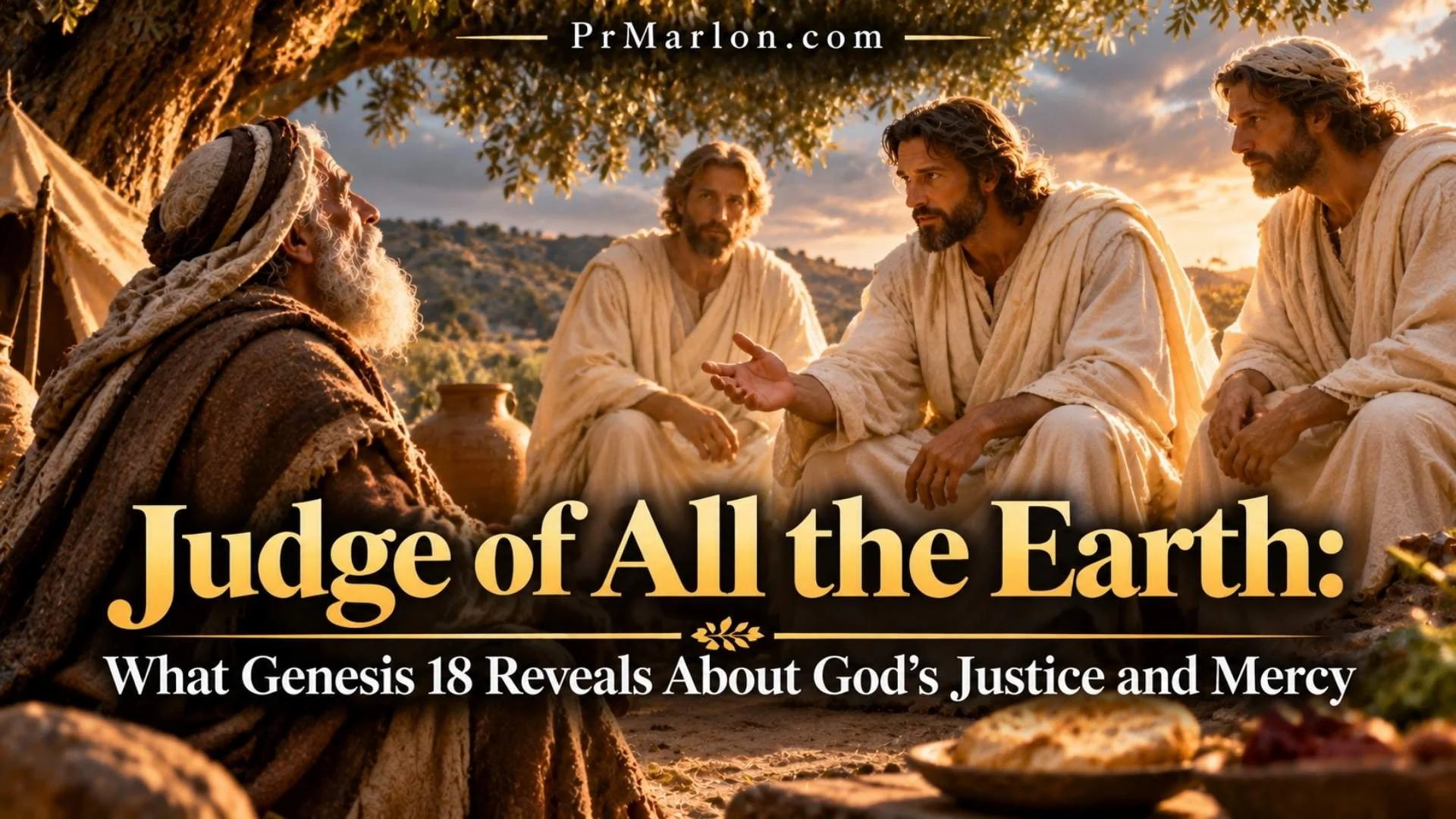
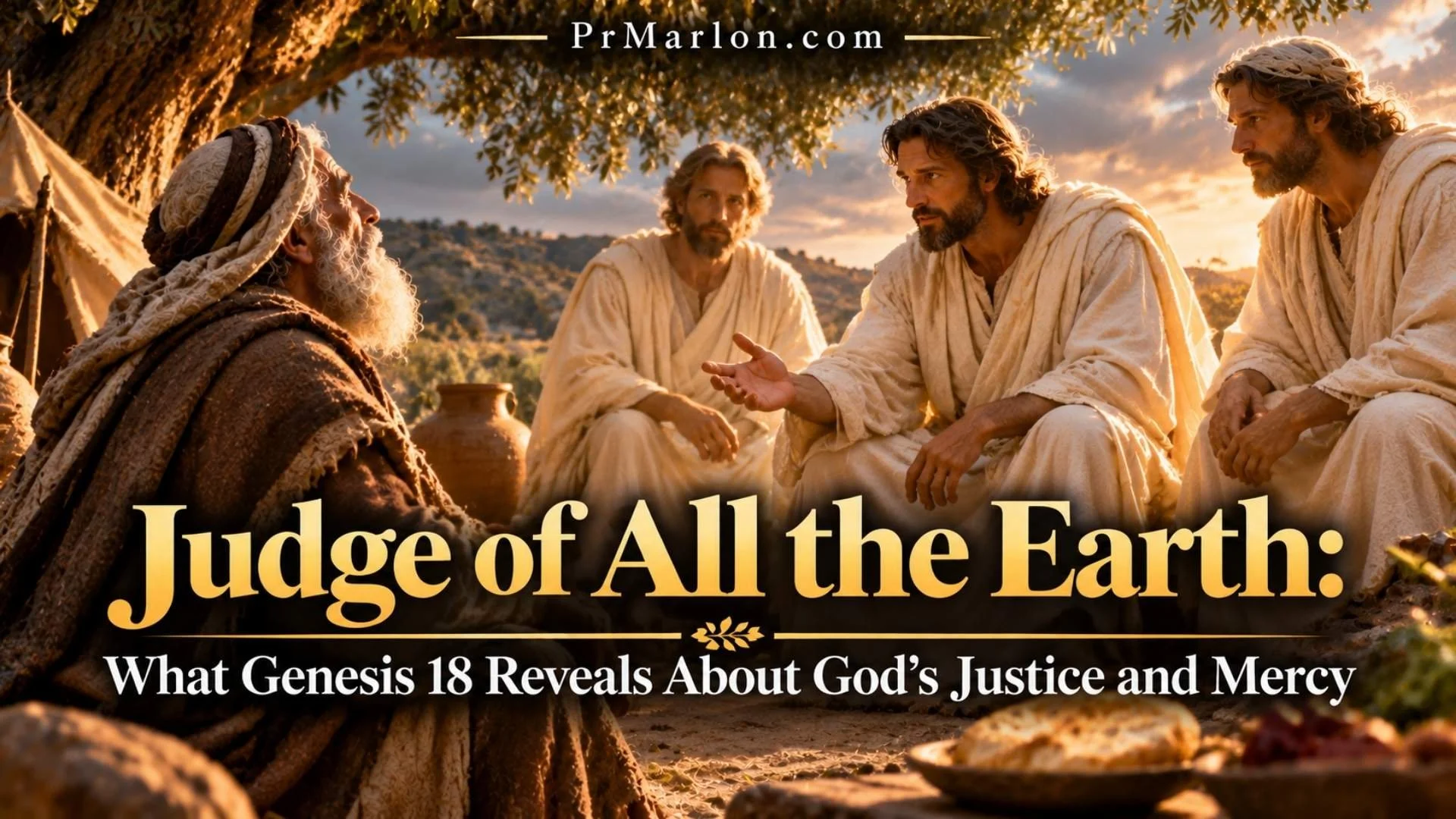
Genesis 18 tells the story of when God appeared to Abraham by the terebinth trees of Mamre. From Abraham’s perspective, he saw three men standing beside him. By verse 13, we find out that one of the “men” was actually God (YHWH, or the LORD). And Genesis 19:1 informs us that the two other “men” were angels. The three visitors came to Abraham so God could tell Abraham and Sarah they would have a son. Abraham and Sarah were old, and Sarah was past the age of childbearing (verses 9-14), so Sarah laughed within herself and later denied it (verses 12, 15). I wrote a post on Genesis 18:1-15, entitled “Is Anything Too Hard for The LORD?”
This post will focus on the conversation that happens after God announces to Abraham and Sarah that they will have a baby. We pick up the story with Genesis 18:16.
Why God Reveals His Judgment to Abraham
16 Then the men rose from there and looked toward Sodom, and Abraham went with them to send them on the way. 17 And the LORD said, “Shall I hide from Abraham what I am doing, 18 since Abraham shall surely become a great and mighty nation, and all the nations of the earth shall be blessed in him? 19 For I have known him, in order that he may command his children and his household after him, that they keep the way of the LORD, to do righteousness and justice, that the LORD may bring to Abraham what He has spoken to him.”
—Genesis 18:16-19 NKJV
One of the men is clearly God Himself, yet the text describes them as “men”; I imagine this is because of their appearance. They looked like three men, though none of them was a mere human.
Verses 17-19 are fascinating; they reveal God’s internal dialogue. We learn that God does not want to keep from Abraham what He is doing. Why would God feel the need to reveal and explain His actions to Abraham? Because of the special mission He has for Abraham. God will bless all the nations of the earth through Abraham. Ultimately, Jesus will be born of a descendant of Abraham. We can trace the “seed” (Genesis 3:15, The First Judgment) from Adam and Eve, to Seth, to Noah, to Abraham, and eventually to Jesus. Because God will bless the world through Abraham and his descendants, God considers it important to reveal to Abraham what He is about to do.
This is an important principle. God does not have to reveal to us what He is going to do, but He chooses to do so. I see this as evidence of God’s desire for a relationship based on trust, and for trust to exist, we need a level of understanding. So the God of the universe takes time to talk to a man about what He is going to do. God does not have to do this; God wants to do this so that Abraham may lead his household well. It is important that Abraham and his household “keep the way of the Lord, to do righteousness and justice, that the Lord may bring to Abraham what He has spoken to him.” (Genesis 18:19b NKJV)
This is beautifully complex. God chose Abraham (Genesis 12: see Called by God and A Call to Adventure - Abraham) and will bless the world through him. God has known Abraham “in order that he may command his children and his household after him” (Genesis 18:19a NKJV). God initiated this; God will do this, but Abraham also has a responsibility to command his children and his household after him, and in order for this to happen, God has known Abraham, and God will reveal His plan to Abraham. Abraham’s obedience is important because, according to Genesis 18:19, it is necessary “that the Lord may bring to Abraham what He has spoken to him.”
This got me thinking about obedience. God can choose me and have a great plan for what He will do through my family and me; He reveals Himself to me and makes promises. But my obedience/cooperation is important. This is not necessarily about Abraham’s salvation, but about God’s plan for Abraham’s life and for the world. God's revelation to Abraham and Abraham’s leadership are important in bringing about what He promised him: to make him a great nation and to bless the world (Genesis 12:1-3; 13:14-17; 15:5-6; 17:1-8).
I am not saying Abraham was saved by good works or obedience; Genesis 15:6 clearly says Abraham believed the LORD, and God counted it to him for righteousness. Abraham was saved by grace and obtained righteousness by faith. Yet, Genesis 18:19 is also clear that God’s relationship with Abraham and His revelation are important because Abraham must lead his household well “that God may bring to Abraham what He has spoken to him. (Genesis 18:19 NKJV)
K. A. Mathews observes:
Ultimately, however, the agenda is wholly God’s to accomplish, for Israel did not live up to its calling, and the realization of the promises were achieved by divine grace (Deut 7:7; 9:4–6; 30:1–6).
—K. A. Mathews, Genesis 11:27–50:26, vol. 1B, The New American Commentary (Nashville: Broadman & Holman Publishers, 2005), 223.
God Investigates Before He Judges
20 And the LORD said, “Because the outcry against Sodom and Gomorrah is great, and because their sin is very grave, 21 I will go down now and see whether they have done altogether according to the outcry against it that has come to Me; and if not, I will know.”
—Genesis 18:20-21 NKJV
God tells Abraham that there is a great outcry against Sodom and Gomorrah, and He will go down and see if it is really as bad as the outcry that has come to Him. Remember, God does not have to tell Abraham any of this. But God wants Abraham to know what He will do and why. God did not want just Abraham to know this, but also his household, his descendants, and that includes us (Galatians 3:7, 29). God wants us to know that He is a judge and why He judges.
Based on what we learned from our study of Genesis 4:4 (Cain and Abel: God's Judgment, Mercy, and Our Responsibility), innocent blood that is spilled cries out to God for judgment. From our study of Genesis 6 (Noah's Flood: Understanding God's Judgment and Grace), we learned that God notices wickedness and evil on earth. So what we are learning from God’s interaction with Abraham fits what we have been learning about Judgment so far in the Bible.
The Bible tells us that God knows everything (Psalm 139:1-6; Proverbs 15:3; Jeremiah 1:5; Luke 12:6-7). Therefore, I do not see this investigation as God gathering information He lacks, but as a revelation of what He wants us to know. God is revealing the careful and just nature of His judgment. God wants Abraham to know and understand His judgment, and as God reveals the process to Abraham, we also learn about God's heart and character; we are invited to see that God's judgment is neither arbitrary nor impulsive. God will make sure that the outcry against Sodom and Gomorrah is not exaggerated. He already knows the answer, but Abraham and we must also understand the answer. This investigation is not for God’s benefit, but ours. So we do not have to wonder why God did what He did.
What we learn about God's character in this story is not limited to this story. God does not change (Malachi 3:6; James 1:17). How God handles Sodom and Gomorrah is how God handles judgment. You can see how what we learn from this story fits with the other stories of judgment in the Bible in my series Investigating Judgment.
Abraham Questions God’s Justice
22 Then the men turned away from there and went toward Sodom, but Abraham still stood before the LORD. 23 And Abraham came near and said, “Would You also destroy the righteous with the wicked? 24 Suppose there were fifty righteous within the city; would You also destroy the place and not spare it for the fifty righteous that were in it? 25 Far be it from You to do such a thing as this, to slay the righteous with the wicked, so that the righteous should be as the wicked; far be it from You! Shall not the Judge of all the earth do right?”
—Genesis 18:22-25 NKJV
The expression “stand before” characterizes an attitude of humility and service (Jeremiah 52:12). It is normally used to describe reverence before God. (Deuteronomy 10:8; 1 Kings 17:1; Zechariah 3:1). (Doukhan, 243) The depiction of Abraham “standing before the Lord” as at a bar of justice fits the patriarch's juridical appeal that follows. (K. A. Mathews, 226–27)
Abraham approaches the LORD (YHWH) and intercedes for Sodom. This is the first recorded prayer in the Bible by one person on behalf of another. (Doukhan, 244) When God tells Noah that He will destroy life on earth (Genesis 6:13, Noah’s Flood), there is no biblical record of Noah interceding for the wicked. I am not putting Noah down, but highlighting Abraham's unusual behavior. Jonah was angry that God spared the Ninevites. (Jonah 4:1-3 God’s Grace for Enemies). Moses and Amos petitioned the Lord on behalf of Israel (Exod 32:11–14; Amos 7:1–6), but Abraham is interceding for wicked foreigners. (K. A. Mathews, 227)
Destroy the righteous with the wicked?
God clearly expects Abraham to practice righteousness and justice (Genesis 18:19). Now, in verse 23, Abraham asks the God of the universe a great question. We all want to know whether God’s justice would be unjust. It would not be right for God to destroy the righteous with the wicked. Would God do such a thing? However, Abraham takes things a step further. It seems to me that Abraham was a great negotiator. He begins his plea by asking if God would destroy the righteous with the wicked. Then he asks God to have mercy on the wicked because of the presence of the righteous.
Abraham asks God if He would spare both Sodom and Gomorrah if there were fifty righteous people in the city. Abraham goes further, adding, “Far be it from You to do such a thing…” You have to admire Abraham’s boldness. Abraham is pointing out how terrible it would be for the Judge of all the earth to slay the righteous with the wicked; the Judge of all the earth must do what is right! Except Abraham is not asking God to spare just the righteous; he is asking God to spare everyone for the sake of the righteous.
Abraham was likely familiar with Sodom and Gomorrah and knew that if God went there, He would find that the outcry against those cities was not exaggerated. So Abraham begins to intercede for Sodom, not by minimizing their wickedness, but by appealing to God’s mercy, asking Him to spare the wicked for the sake of the righteous.
Abraham argues that God must not be unjust in His judgment. God must not destroy the righteous along with the wicked. But Abraham proceeds to ask for God to be merciful and spare the wicked because of the presence of the righteous. Abraham has the audacity to ask, “Shall not the Judge of all the earth do right?” Who does Abraham think he is? Would God be willing to put up with this insolence on the part of Abraham? Is God going to point out to Abraham that all have sinned (Romans 3:23; Ecclesiastes 7:20) and therefore all of them deserve death (Romans 6:23)? Does God rebuke Abraham for questioning His judgment?
How Far Will God’s Mercy Go?
So the LORD said, “If I find in Sodom fifty righteous within the city, then I will spare all the place for their sakes.”
—Genesis 18:26 NKJV
God does not rebuke Abraham. God is not upset. God engages with Abraham and is willing to spare the entire place for the sake of fifty righteous people living within the city. I do not believe that Abraham is making God change His mind. Remember, God knows everything (as we saw above); this interaction is not for God’s benefit. God already knows how many righteous people live in the city. This interaction helps Abraham and us understand how far God is willing to go to spare the wicked for the sake of the righteous.
Encouraged by the interaction and God’s willingness, Abraham probes a bit further. Abraham leans into God’s goodness and mercy, and he wonders how far this can go.
27 Then Abraham answered and said, “Indeed now, I who am but dust and ashes have taken it upon myself to speak to the Lord: 28 Suppose there were five less than the fifty righteous; would You destroy all of the city for lack of five?”
So He said, “If I find there forty-five, I will not destroy it.”
29 And he spoke to Him yet again and said, “Suppose there should be forty found there?”
So He said, “I will not do it for the sake of forty.”
—Genesis 18:27-29 NKJV
Abraham begins the negotiations at 50, and God is willing. Now Abraham subtracts 5 from the total and asks God if He would destroy the city simply because 5 are missing. Maybe they went backpacking, or are away on a business trip. Would God destroy the entire place because 5 people were missing? Abraham never mentions the number 45; he focuses on how it would be just 5 short of 50.
God agrees to not destroy Sodom and Gomorrah if He finds 45 righteous people there. Abraham finds God’s answer encouraging and asks what God would do if only 40 were righteous. God says He will spare the place for the sake of 40. God is willing to spare everyone; all the wicked people who deserve destruction will be spared by God if there are 40 righteous there. It is important for us to know this. But Abraham is not done. He takes it further.
30 Then he said, “Let not the Lord be angry, and I will speak: Suppose thirty should be found there?”
So He said, “I will not do it if I find thirty there.”
31 And he said, “Indeed now, I have taken it upon myself to speak to the Lord: Suppose twenty should be found there?”
So He said, “I will not destroy it for the sake of twenty.”
—Genesis 18:30-31 NKJV
Abraham is humble and treads carefully, yet he feels compelled to intercede for the wicked inhabitants of Sodom. He asks if the God of the universe, the Judge of the whole world, would spare Sodom from destruction if only 30 righteous people lived there. God agrees to spare them. I imagine Abraham being really excited and nervous at the same time. Abraham knows that he is a mere human, but since God is listening, why not push a bit further? He carefully asks about 20. God is willing to spare everyone for the sake of 20 righteous people living in the city.
32 Then he said, “Let not the Lord be angry, and I will speak but once more: Suppose ten should be found there?”
And He said, “I will not destroy it for the sake of ten.” 33 So the LORD went His way as soon as He had finished speaking with Abraham; and Abraham returned to his place.
—Genesis 18:32-33 NKJV
Abraham decides to ask one more time, fearing that he will anger God by asking so much, but daring to intercede for the wicked inhabitants of Sodom and Gomorrah; he asks about 10. What if God found only 10 righteous there? God agrees not to destroy the cities for the sake of 10 righteous people living there. At this point, Abraham stops. God never shows any signs of anger or frustration. Notice that God does not stop Abraham; God never says the number is too low.
The text doesn't explain why Abraham stopped at 10, but there are plenty of valid possibilities; ultimately, we just don’t know. Some suggest that 10 was the minimum number for a community or quorum (see Ruth 4:2 Love is…), or maybe it was as far as Abraham was willing to risk asking, or perhaps it had become clear to Abraham that God is not looking for excuses to destroy the wicked but longs to spare them, and he decides to trust God in His judgment. Abraham is not merely learning about God’s justice; he is watching it demonstrated by the very God whose ways he is supposed to teach his household.
The conversation ends without conflict. Abraham asks difficult questions, repeatedly challenges God's judgment, and intercedes for wicked people. Yet God does not rebuke him. This is a beautiful picture of a relationship in which difficult questions can be asked without destroying trust.
Takeaway
The clearest application of this story concerns prayer. We established that God is merciful and willing to save; now we approach God in prayer accordingly.
One of the essential and most blessed features of the believer’s fellowship with God is the privilege and responsibility, the joy and duty of intercession. The Divine announcement concerning Sodom led Abraham to intercede for the doomed city. God’s revelation thus finds its response in His servant’s intercession. Some of the elements of intercession are clearly shown in the above passages.
—W. H. Griffith Thomas, A Devotional Commentary: Genesis (Grand Rapids, MI: Wm. B. Eerdmans Publishing Company, 1946), 164.
Whenever we struggle with prayer and what to pray for, we should let the Bible inform our prayer life. God’s word does us good when it gives us matter for prayer and stirs us to it. When God speaks to us through the Bible, we must consider what we have to say to him in response. (Matthew Henry, 46)
Abraham spoke to God as to a friend, and God appeared to him as a man (Genesis 18:2, 16), but we can talk to God through prayer as we would a friend. I am encouraged by Abraham’s interaction with God because God was willing to engage, listen, and answer. God was not offended or angered by Abraham’s questions about His judgment. The biblical text portrays God as willing to engage with Abraham and teach him about Himself. Because Abraham was willing to have those difficult conversations with God, we understand God's heart better.
We learned about God from Abraham’s conversation with Him. Likewise, when we pray, we grow in our relationship with God. We learn about Him and about ourselves as we spend time in prayer. Our prayers don’t have to be safe or memorized. We can bring our questions and concerns to God; He can handle them. The important part is talking to God and spending time in prayer.
A strong faith is not about the absence of difficult questions. Abraham approaches God with humility, but he does not remain silent. His confidence in God's character gives him the courage to ask whether the Judge of all the earth will do what is right. Genuine faith does not mean avoiding difficult conversations with God. Sometimes faith is what gives us the courage to have them.
God promised that all nations would be blessed through Abraham (verse 18). Here we see that blessing in action: Abraham intercedes for wicked foreigners he has no obligation to help.
The Judge Who Is Willing to Spare
Regarding judgment, we again see that God is not looking for excuses to punish and destroy, but for reasons to save and spare. The investigation (Genesis 18:21) is not for God to learn something new, but for us to understand. God decides to reveal this to Abraham and to us. So we know there was a great outcry against Sodom and Gomorrah, and that their sin was very grave (verse 20). We also know that God is merciful and willing to spare the wicked if He finds at least 10 righteous among them.
Abraham began this conversation wondering whether the Judge of all the earth would do what was right. By the end, God had revealed that He was willing to spare an entire wicked city for the sake of just ten righteous people. Abraham did not have to convince God to become merciful. God's mercy was already there, waiting to be revealed.
This is the God who judges the earth. He knows humanity's wickedness; He hears the cries of those who suffer, and He does not take judgment lightly. When we struggle to understand God's judgments, we can remember Abraham's question: "Shall not the Judge of all the earth do right?"
The story invites us to trust that He will.
But what actually happens to Sodom and Gomorrah? I will cover that in my next post.
Sources:
Doukhan, J. B., & Davidson, R. M. (2025). Seventh-day Adventist International Bible Commentary, Volume 1, Genesis and Exodus. Pacific Press Publishing Association.
K. A. Mathews, Genesis 11:27–50:26, vol. 1B, The New American Commentary. Nashville: Broadman & Holman Publishers, 2005.
Matthew Henry, Matthew Henry’s Commentary on the Whole Bible: Complete and Unabridged in One Volume (Peabody: Hendrickson, 1994)
W. H. Griffith Thomas, A Devotional Commentary: Genesis (Grand Rapids, MI: Wm. B. Eerdmans Publishing Company, 1946)